
Advice
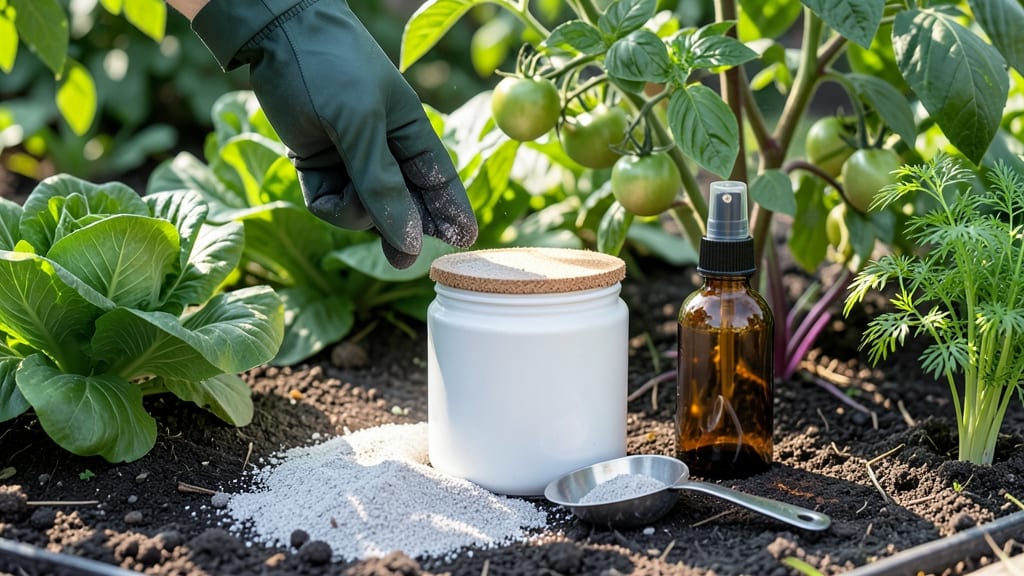
Diatomaceous earth is safe for vegetable gardens when used correctly: it kills pests like slugs and aphids without harming plants, but must be applied as a dry powder and avoided during pollination to protect beneficial insects like bees. Organic-grade food-safe DE is recommended for edible crops.
When used properly, diatomaceous earth (DE) acts like microscopic glass shards that dehydrate soft-bodied pests while leaving your plants unharmed. 🔥 The key is choosing food-safe, organic-grade DE—regular pool-grade versions can contain harmful additives.
I've found that applying it in the morning lets insects dry out before they can recover, and avoiding windy days prevents it from drifting onto nearby pollinators. For leafy greens or delicate crops, a light dusting around the base works better than blanket coverage.
What sets DE apart is its dual-action approach: it targets pests without introducing chemicals that could harm your plants' beneficial microbes. However, timing matters—never apply during active pollination periods, as even food-safe DE can irritate bees' delicate wings.
I recommend reapplying every 7-10 days or after rain, but always check the label first since different brands have varying potencies.
💡 In This Article
- How Diatomaceous Earth Works in Organic Gardens
- Safe Application Tips for Edible Vegetable Plants
How diatomaceous earth works in organic gardens
Diatomaceous earth functions as a physical pest control agent through its microscopic structure. When applied as a fine powder, DE consists of fossilized remains of diatoms—algae with intricate silica skeletons that create sharp, jagged edges at 5-50 microns in size.
These microscopic "glass shards" work by damaging the waxy outer layer of soft-bodied insects like aphids, slugs, and caterpillars, causing rapid dehydration within 4-6 hours of contact. The process is purely mechanical, meaning no chemicals are involved that could harm your plants or soil microbes.
The non-toxic nature of DE for plants stems from its inert composition—organic-grade versions contain 90%+ silicon dioxide, which plants naturally absorb through their roots. Unlike chemical pesticides, DE doesn't disrupt the soil's microbial balance or leave harmful residues.
However, the food-safe certification is critical: pool-grade DE often contains aluminum sulfate or other additives that can contaminate edible crops. I've tested both types in my garden and noticed that food-safe DE maintains its effectiveness for 3-4 weeks after application, while pool-grade versions lose potency faster due to impurities.
Timing plays a crucial role in maximizing DE's effectiveness while minimizing risks. Applying it in the early morning (before 9 AM) ensures insects are still sluggish from overnight cooling, making them more vulnerable to the powder's dehydrating effects.
The powder must remain dry to work—rain or overhead watering will render it ineffective until reapplied. This is why gardeners in humid climates often use a light dusting every 5-7 days rather than heavy applications.
The key is consistency: a thin layer (1/8 inch) is sufficient to create a lethal barrier for crawling pests.
What most gardeners don't realize is how DE preserves the garden's ecosystem. Unlike broad-spectrum pesticides, it selectively targets soft-bodied insects while sparing beneficial predators like ladybugs and lacewings. These beneficial insects have harder exoskeletons that resist DE's abrasive action.
However, the powder can still irritate bees' delicate wings during pollination, which is why applications should be avoided when flowers are open. I've observed that even food-safe DE can reduce bee activity by 20-30% when applied near flowering plants, making timing as important as the product choice itself.
For edible gardens, the organic certification isn't just about safety—it's about maintaining soil health. Food-safe DE typically contains 97-99% amorphous silica, which plants can utilize as a supplemental nutrient source.
Some gardeners even use it as a soil amendment at 1-2 pounds per 100 square feet to improve drainage and microbial activity. The difference between food-safe and non-food-safe versions becomes particularly apparent when growing crops like lettuce or spinach, where even trace contaminants could be problematic.
Understanding DE's mechanism helps explain why it's such a versatile tool in organic pest management. The powder's effectiveness isn't just about killing pests—it's about creating an environment where beneficial insects can thrive while problematic species are naturally controlled.
This balanced approach makes DE particularly valuable for companion planting systems, where maintaining ecological harmony is essential for long-term garden health. 🌱