
Tools
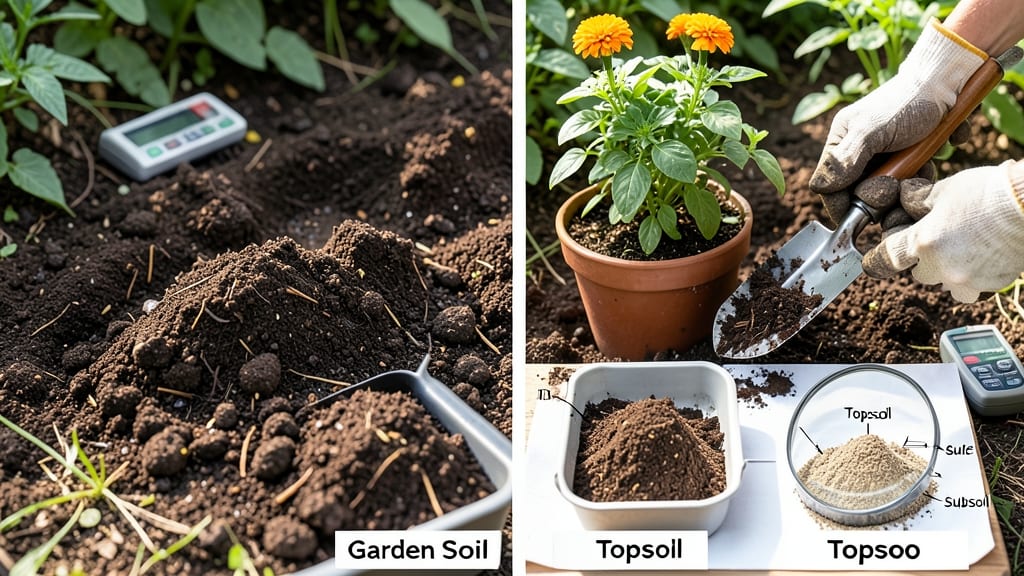
Garden soil is not the same as topsoil: topsoil is the natural, nutrient-rich upper layer (0-6 inches deep) found in nature, while garden soil is a custom blend that mixes topsoil with compost, sand, or other additives to enhance plant growth.
Topsoil is what you find naturally in the ground, packed with organic matter and minerals from decomposed plants and animals. 🌱 It's perfect for filling in new garden beds or leveling uneven lawn areas because it already contains the essential nutrients plants need.
However, garden soil takes this a step further by combining topsoil with additional organic materials like compost or peat moss, which boosts fertility and improves drainage for specific plants like vegetables or flowers.
Think of topsoil as the foundation—great for establishing a base—but garden soil is the premium mix tailored for what you're planting.
For example, if you're growing tomatoes, you might want to add extra compost to garden soil to give them the nutrients they crave, while topsoil alone might not provide enough for heavy feeders.
💡 In This Article
- Composition Differences Between Topsoil and Garden Soil
- Choosing the Right Soil for Your Garden or Lawn
Composition differences between topsoil and garden soil
Topsoil forms naturally in the O (organic) and A (topmost mineral) horizons of soil profiles, where decomposed plant material and minerals accumulate over centuries. This layer typically contains 5-10% organic matter by volume, providing essential nutrients like nitrogen, phosphorus, and potassium.
The texture varies but often includes 25-40% sand, 20-30% silt, and 20-30% clay, creating a crumbly structure that retains moisture while allowing drainage.
Garden soil, however, is an engineered product that intentionally boosts these natural properties. By blending topsoil with 30-50% compost or aged manure, garden soil can achieve 15-25% organic matter—nearly double what you'd find naturally.
This extra organic content improves water retention by 30-50% compared to pure topsoil, while also creating more pore space for root growth. The pH also becomes more stable, typically ranging from 6.0 to 7.5 in garden soil versus 5.0 to 6.5 in many natural topsoils, making it more plant-friendly.
The science behind these differences lies in how amendments alter soil chemistry. Compost introduces beneficial microbes that break down organic matter more efficiently, while perlite or vermiculite (often added to garden soil) improve aeration by creating 20-30% more air pockets than topsoil alone.
This is why garden soil often outperforms topsoil for container plants or heavy feeders like tomatoes—it mimics the ideal growing conditions found in rich forest floors or well-tended vegetable patches.
Consider this comparison: Pure topsoil might contain 0.5-1.5% nitrogen naturally, while garden soil with added compost can reach 2-4% nitrogen.
The difference becomes obvious when planting nitrogen-hungry crops like corn or leafy greens, where garden soil provides 2-3 times more available nitrogen during the critical early growth stages. 🌱 The trade-off?
Garden soil costs $30-$60 per cubic yard versus $15-$30 for topsoil, but the nutrient boost often justifies the expense for serious gardeners.
One key distinction lies in particle stability. Topsoil's natural clay content can compact over time, reducing porosity by 15-25% when saturated. Garden soil's added organic matter maintains fluffier structure even when wet, preventing this compaction.
This is why garden soil stays loose and workable for 2-3 years after mixing, while topsoil may require annual tilling to maintain good tilth.
For visual learners, imagine topsoil as a sandy loam cake with natural fruit fillings (nutrients), while garden soil is that same cake with extra whipped cream (compost) and chocolate chips (mineral amendments) folded in.
The result isn't just more nutrients—it's a soil structure that actively supports root growth and microbial activity at a molecular level.