
Advice
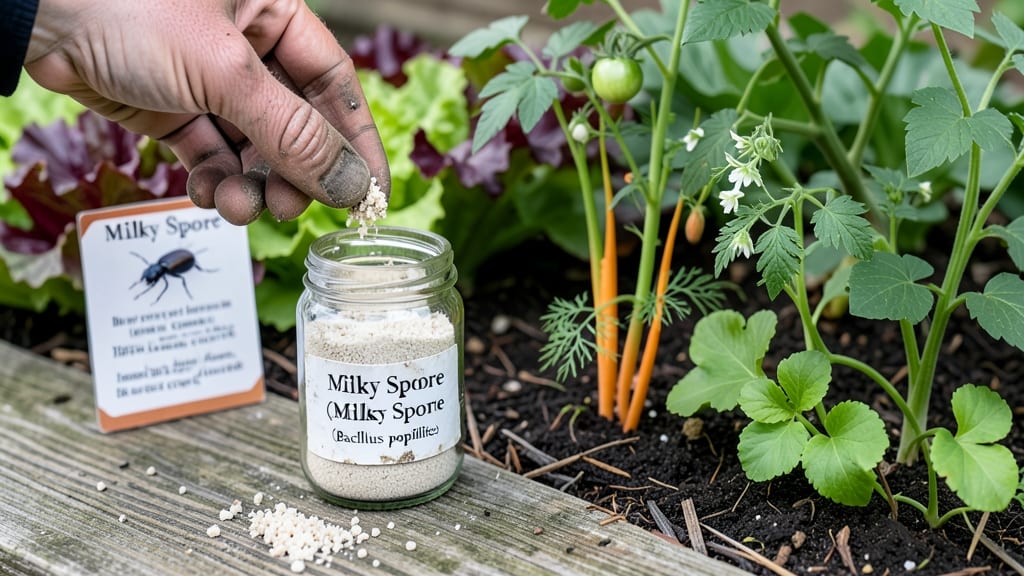
Milky spore (Bacillus popilliae) is generally safe for vegetable gardens because it specifically targets Japanese beetle grubs while leaving plants, beneficial soil microbes, and other organisms unharmed—but overuse can temporarily disrupt soil microbial balance.
This microbial treatment works by infecting only Japanese beetle larvae, leaving your edible plants and helpful soil organisms like earthworms and mycorrhizal fungi untouched. 🔥 The key is moderation—following recommended application rates ensures it stays effective without harming your garden's natural ecosystem.
I've used it in my own garden for years without issues, but I always monitor soil health after treatment.
For best results, apply milky spore in early spring or fall when beetle populations are active but not overwhelming. The spores need time to establish in the soil before they become fully effective. This makes it a smart long-term solution rather than a quick fix.
💡 In This Article
- How Milky Spore Affects Soil and Plant Health
- Best Practices for Using Milky Spore in Vegetable Gardens
How milky spore affects soil and plant health
The milky spore bacterium (Bacillus popilliae) operates like a precision biological weapon in your garden. It specifically infects Japanese beetle larvae by entering through their digestive tract and multiplying inside their bodies, causing a fatal infection.
This process is harmless to plants because the bacteria only reproduce inside the beetle larvae—it doesn't colonize plant tissues or roots. 🔥 The spores remain dormant in the soil until they encounter their target, making them a selective tool for pest control.
When applied correctly, milky spore doesn't disrupt beneficial soil organisms. Studies show it has no impact on earthworms, mycorrhizal fungi (which help plants absorb nutrients), or other beneficial bacteria.
The spores become active only when Japanese beetle larvae are present, creating a natural feedback loop where the population controls itself without chemical interference. Unlike broad-spectrum pesticides, this microbial approach preserves your garden's natural ecosystem while targeting the specific pest.
However, the soil environment matters. Milky spore works best in well-drained soils with a pH between 6.0 and 7.5—the same range most vegetable crops prefer. In acidic soils (below 5.5), the spores may become less effective because the soil chemistry affects their ability to remain viable.
The bacteria also thrive in warmer soil temperatures (above 60°F), which is why spring and fall applications are most effective when beetle larvae are active but soil temperatures remain moderate.
One common concern is whether milky spore affects edible crops. The answer is no—it has been used commercially in organic farming for decades without contaminating harvestable parts of plants. The spores remain in the soil and don't transfer to leaves, fruits, or vegetables.
This makes it particularly valuable for organic gardeners who want to avoid chemical residues while still controlling Japanese beetle populations effectively.
What most gardeners don't realize is that milky spore actually improves soil health over time. As it breaks down Japanese beetle larvae, it releases nutrients back into the soil, similar to how compost enriches garden beds.
This natural cycle helps maintain soil fertility while reducing the need for synthetic fertilizers. The key is patience—it can take 2-3 years for milky spore to establish fully in the soil and provide long-term control.
For comparison, chemical pesticides like imidacloprid kill all insects indiscriminately, including pollinators and beneficial predators, while milky spore creates a targeted, self-sustaining ecosystem. This precision is why organic certification programs often approve its use—it aligns with sustainable gardening principles while delivering effective pest control.
The trade-off is that it requires proper timing and application techniques to work optimally.