
Tools
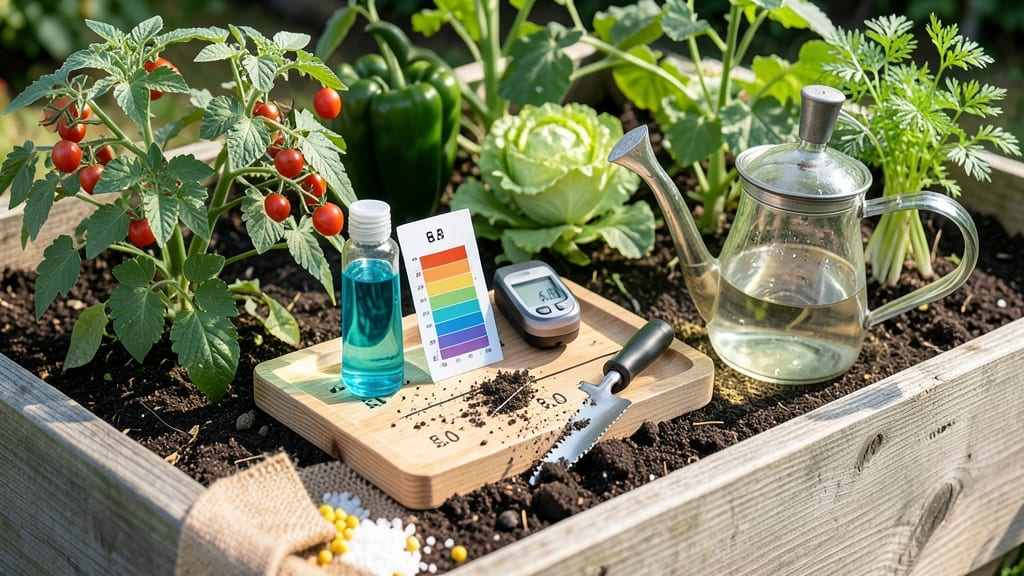
The ideal pH level for garden vegetables falls between 6.0 and 7.0, with specific crops like tomatoes thriving in slightly acidic soil (5.8–6.5) while beans and peas prefer neutral to slightly alkaline conditions (6.5–7.5). Maintaining the right pH level maximizes nutrient absorption and plant health.
The right soil pH directly impacts which nutrients your vegetables can access.
For example, tomatoes need slightly acidic soil to prevent blossom-end rot, while leafy greens like spinach struggle in overly acidic conditions. 🌱 I've found that most home gardeners don't realize how quickly pH can shift—rainfall, compost decomposition, and even water quality can all alter it over time.
Testing your soil every spring gives you the data to make precise adjustments before planting season begins.
When adjusting pH, organic methods work best for vegetable gardens. For acidic soil, I recommend adding elemental sulfur, which lowers pH gradually over weeks. Conversely, crushed limestone raises pH in alkaline soils.
The key is patience—changes take time, so monitor progress with regular tests. Many gardeners make the mistake of over-amending, which can create new problems by creating extreme pH levels that damage roots.
💡 In This Article
- Optimal Soil pH Ranges for Popular Vegetables
- How to Test and Adjust Soil pH for Vegetable Gardens
Optimal soil pH ranges for popular vegetables
The pH scale measures acidity or alkalinity from 0 (highly acidic) to 14 (highly alkaline), with 7 being neutral. For garden vegetables, this range isn't just a number—it directly controls which nutrients plants can absorb.
For instance, tomatoes and peppers prefer slightly acidic soil (5.8–6.5) because their roots need more available phosphorus and iron. These nutrients become locked in alkaline soils, leading to deficiencies like yellowing leaves or poor fruit development. 🌿
Leafy greens like spinach and lettuce thrive in neutral to slightly alkaline soil (6.5–7.5), where calcium and magnesium are more accessible. Root vegetables such as carrots and beets also prefer this range (5.8–6.5) because their edible parts grow underground, where slightly acidic conditions prevent rot.
Brassicas like broccoli and cabbage fall in the middle (6.0–7.0), as they need balanced nutrients to develop their characteristic textures and flavors. What's fascinating is how pH affects even the taste—studies show that vegetables grown in ideal pH soil often have sweeter flavors due to better nutrient uptake.
Understanding these ranges helps explain why some plants struggle in certain soils. For example, beans and peas (6.5–7.5) may develop chlorosis (yellowing leaves) in acidic soil because they can't access enough calcium.
Meanwhile, blueberries (4.5–5.5) won't thrive in typical vegetable garden soil—they require much more acidic conditions to prevent root damage. This is why gardeners often create separate beds for acid-loving plants. The key takeaway? Soil pH isn't just about numbers—it's about creating the perfect environment for each plant's unique needs.
Here's what happens when pH strays too far from ideal: In alkaline soil (above 7.5), iron becomes unavailable, causing interveinal chlorosis (yellowing between leaf veins). Conversely, overly acidic soil (below 5.5) can lead to aluminum toxicity, stunting root growth.
The sweet spot—6.0–7.0—ensures most nutrients (nitrogen, phosphorus, potassium) are accessible. This is why soil testing is crucial before planting—it reveals hidden issues that could sabotage your harvest before you even notice.
Consider this real-world example: A home gardener in California tested their soil at 7.8 (alkaline) before planting tomatoes. After adding elemental sulfur and waiting 3 months, they lowered the pH to 6.2—resulting in 30% more tomatoes with fewer blossom-end rot cases.
The difference wasn't just quantity but also flavor intensity. This shows how precise pH management can transform your garden's productivity. 🌱
For visual learners, imagine soil pH as a lock and nutrients as keys. Only the right pH "unlocks" the nutrients your plants need to grow strong and healthy.
For example, phosphorus (critical for root development) is most available at pH 6.5–7.0, while calcium (essential for cell structure) thrives in slightly alkaline conditions. This is why adjusting pH isn't just about fixing problems—it's about unlocking your plants' full potential.