
Planting
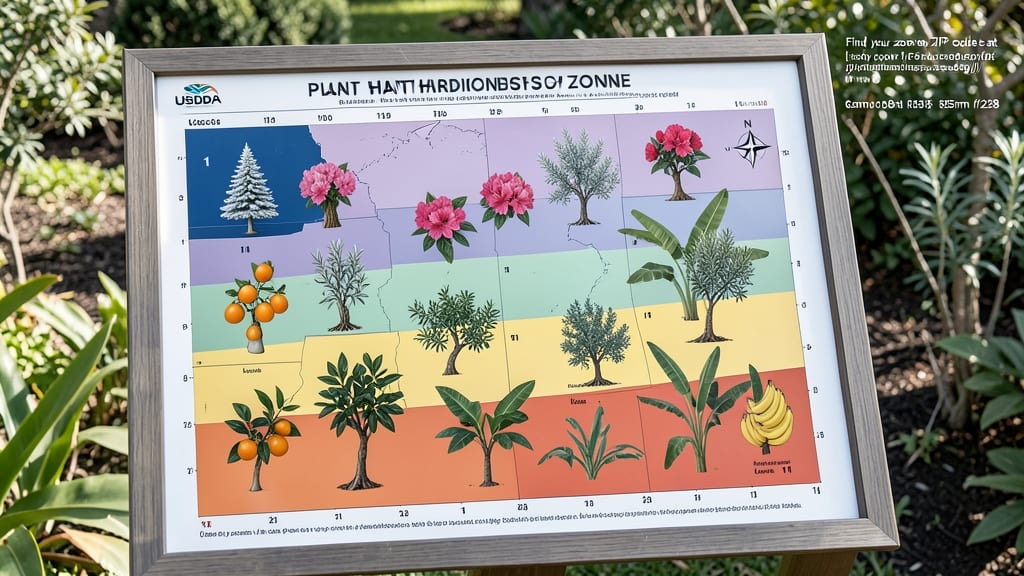
Finding your plant gardening zones helps you select cold-hardy plants by identifying your area's average winter lows. The USDA Plant Hardiness Zone Map divides regions into 13 zones based on 10°F temperature increments, with zone 1 being coldest and zone 13 warmest.
Understanding these zones unlocks the secret to successful gardening. The USDA system, updated in 2023, now accounts for climate change by shifting zone boundaries northward, reflecting warmer average temperatures. For example, a plant labeled "zones 5-9" will survive winters where temperatures rarely drop below -15°F to 20°F.
This means if you're in zone 7, you can safely grow tomatoes (zone 8-11) but may need to protect tender perennials like lavender (zone 5-9) during unexpected freezes. 🌱
While the zone map provides a solid starting point, real-world success depends on accounting for your garden's microclimates. A south-facing wall can create a zone 2-3 warmer than your official zone, while a low-lying area might experience frost pockets that push you into a colder classification.
I recommend testing your microclimates by observing where frost forms first in your yard or using a minimum thermometer to track overnight temperatures in different spots. These adjustments often mean the difference between thriving plants and disappointing losses. 🌡️
💡 In This Article
- How USDA Plant Hardiness Zones Work
- Adjusting for Microclimates in Your Garden
How USDA plant hardiness zones work
The USDA Plant Hardiness Zone Map divides North America into 13 zones based on the average annual minimum winter temperature. Each zone represents a 10°F range—zone 1 endures -60°F to -50°F, while zone 13 stays above 60°F.
This system helps gardeners predict which plants can survive winter's harshest conditions, as most plants have a critical cold threshold they cannot tolerate. For example, a zone 5 plant like a lilac can handle down to -20°F, while a zone 9 olive tree needs protection below 20°F. 🌡️
The zones were first introduced in 1960 and updated in 2023 to reflect climate change, with boundaries shifting northward by up to 2-3 zones in some regions. The science behind this involves analyzing 30 years of temperature data from weather stations across the country.
Plants respond to cold stress through a process called cold acclimation, where they produce antifreeze proteins to protect cell membranes. However, if temperatures drop below their tolerance for more than 4-6 hours, these proteins fail, leading to irreversible damage.
This is why the minimum temperature (not average) determines survival.
Understanding these zones matters because even hardy plants can fail if exposed to unexpected freezes. For instance, a zone 6 peach tree might survive winters in zone 5 if protected, but a sudden -25°F snap could kill it.
The USDA map also accounts for heat zones during summer, though these are less commonly used for planting decisions. Most gardeners focus on winter hardiness because summer heat is often manageable with watering and shade. 🌳
Each zone is further divided into a and b subzones, representing 5°F increments. For example, zone 7a ranges from -10°F to -5°F, while 7b stays above -5°F. This precision helps gardeners in border areas choose plants that align closely with their local conditions.
The map also includes transition zones where temperatures fluctuate near the boundary, requiring extra caution. For example, a gardener in zone 6b might safely grow zone 7 plants but should monitor winter lows closely.
To use the map, enter your ZIP code or address to find your zone. The interactive tool shows your exact location on a color-coded map, with darker shades indicating colder zones. For example, Minnesota's northern border falls in zone 2, while Florida's southern tip is zone 11.
The map also provides frost-free date averages, which help determine planting times. However, these dates vary yearly, so always check local weather forecasts for the most accurate timing. ❄️
What most gardeners don't realize is that the zone map is a general guideline, not an absolute rule. Plants labeled for your zone may still struggle if exposed to unseasonable cold snaps, while some zone-hardier plants might thrive in slightly warmer areas.
The key is balancing the map's data with your garden's unique conditions. For example, a zone 5 gardener might successfully grow zone 6 roses in a sheltered microclimate but lose them in an exposed bed. 🌹