
Lawn
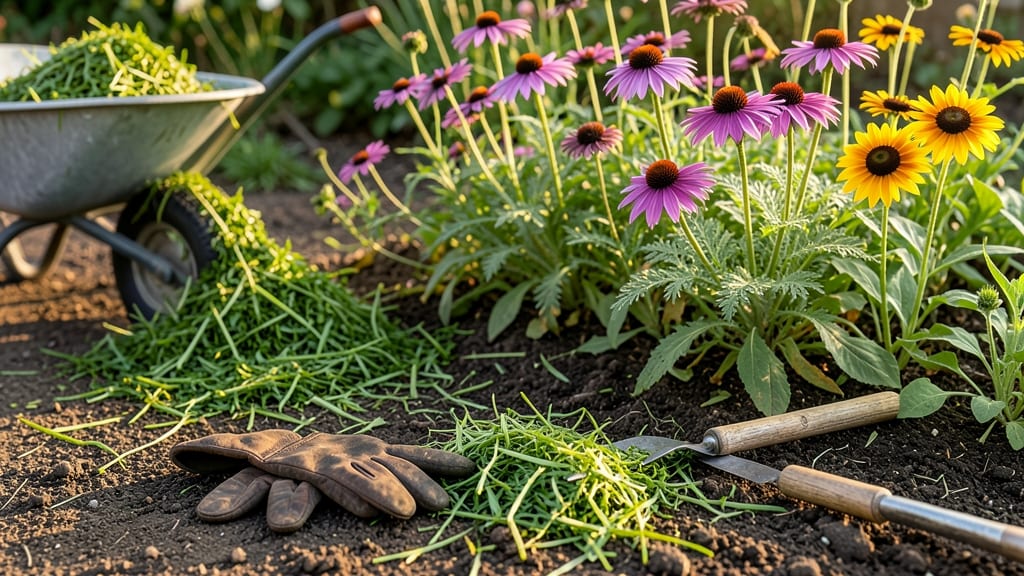
Putting grass clippings in your garden provides a free, nutrient-rich fertilizer that enriches soil with nitrogen while reducing weeds and moisture loss. Always maintain a 3-4 inch mowing height and mulch finely to prevent thatch buildup.
Putting those grass clippings in your garden works like a slow-release organic fertilizer because they decompose naturally, releasing essential nutrients over time. 🌱 When you leave them on the lawn, they break down into humus, improving soil structure and encouraging beneficial microbial activity.
This organic approach contrasts sharply with synthetic fertilizers, which can disrupt soil ecosystems while delivering quick but short-lived results.
For best results, aim for a 3-4 inch mowing height—this ensures clippings are small enough to decompose quickly without smothering grass. Mulching clippings directly into the lawn also prevents thatch layers, which can suffocate roots.
If you're dealing with diseased grass, however, avoid using those clippings in your garden to prevent spreading pathogens.
💡 In This Article
- How Grass Clippings Boost Soil Health Naturally
- Best Practices for Using Grass Clippings in Landscapes
How grass clippings boost soil health naturally
Grass clippings act like a slow-release organic fertilizer because they're packed with nitrogen—about 3-5% by dry weight—which grass naturally absorbs from the soil.
When clippings decompose, they return this nitrogen in a form plants can easily absorb, unlike synthetic fertilizers that often release nutrients too quickly, causing runoff and soil imbalance.
The decomposition process also releases carbon, which feeds beneficial soil microbes and fungi, creating a thriving ecosystem that improves soil structure over time.
Here's what happens under the surface: Clippings break down through microbial activity, forming humus—a dark, spongy material that improves soil aeration and water retention.
A study by the University of Nebraska found that lawns with clippings retained 25% more moisture than those without, while synthetic fertilizers often lead to compacted soil that repels water.
The fine texture of properly mulched clippings also creates a natural mulch layer that suppresses weeds by blocking sunlight from reaching weed seeds.
What makes this organic approach unique is how it mimics nature's nutrient cycle. Unlike chemical fertilizers that provide a quick nutrient boost, grass clippings release nutrients gradually as they decompose, preventing sudden spikes that can burn plant roots.
This slow release is especially valuable for lawns and gardens, where consistent, low-level nutrition promotes healthier, more resilient growth. 🌱 The result? Soil that's richer in organic matter, better at holding water, and teeming with beneficial microbes that break down organic material.
For comparison, consider synthetic fertilizers: They deliver nitrogen in a highly soluble form (like ammonium nitrate) that plants can absorb immediately, but this often leads to nutrient runoff during rainstorms.
Grass clippings, on the other hand, release nitrogen through a process called mineralization, where microbes convert organic nitrogen into plant-available forms like nitrate. This natural process also helps balance soil pH over time, reducing the need for lime or sulfur amendments.
The texture of clippings plays a crucial role too. When you mow at a 3-4 inch height, the clippings are finely chopped and spread evenly, allowing them to decompose quickly without forming a thick thatch layer.
Thatch—layers of dead grass and roots—can suffocate soil and block water and nutrients from reaching plant roots. Proper mulching ensures clippings decompose within 2-4 weeks, turning into a nutrient-rich soil amendment rather than a smothering layer.
One often-overlooked benefit is how clippings improve soil structure by increasing its porosity. The organic matter from decomposed clippings binds soil particles together, creating larger aggregates that improve drainage and root penetration.
This is particularly valuable in clay soils, which tend to compact easily, or sandy soils that drain too quickly. Over time, regular use of grass clippings can transform poor soil into a fertile growing medium that requires fewer amendments.