
Tools
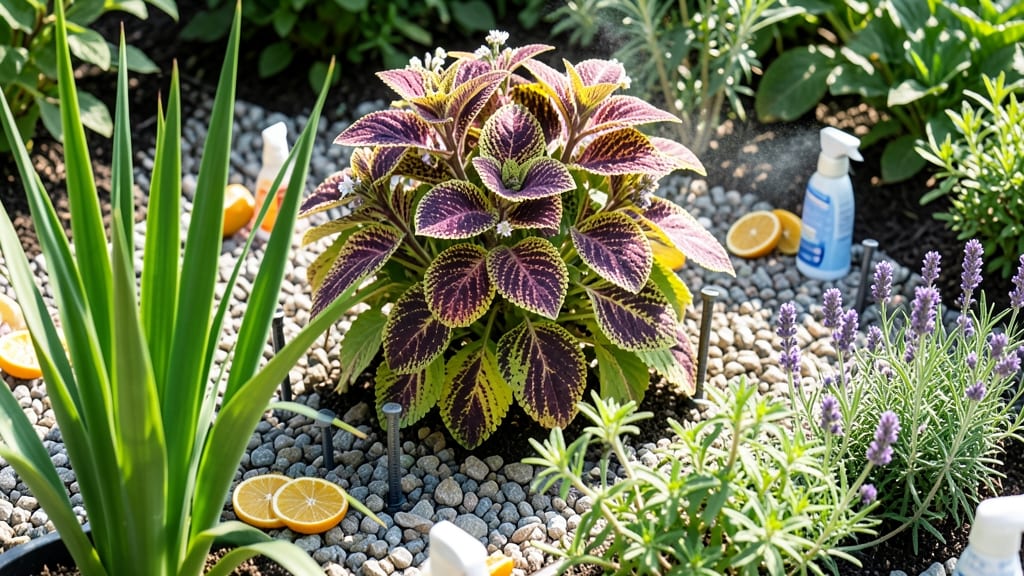
To repel cats from your garden, use natural deterrents like citrus peels or coffee grounds, combine them with physical barriers such as prickly plants or chicken wire, and maintain these methods consistently to create an unwelcome environment without harming the cats.
Cats have sensitive noses, so strong smells like citrus, vinegar, or peppermint disrupt their natural behaviors. 🔥 Physical barriers like chicken wire or thorny plants work because cats dislike rough textures under their paws.
The key is consistency—reapply sprays every few days and reinforce barriers seasonally. I've found that combining both methods yields the fastest results, especially in high-traffic garden areas.
For a quick fix, try sprinkling used coffee grounds around plants—cats dislike the smell and texture. If you're dealing with persistent visitors, ultrasonic repellents emit high-frequency sounds cats can't hear but find unpleasant. Always test deterrents on a small area first to avoid damaging your plants.
💡 In This Article
- Why Cats Avoid These Natural Garden Deterrents
- Best DIY Cat-Repellent Sprays and Physical Barriers
Why cats avoid these natural garden deterrents
Cats rely heavily on their senses, especially smell and touch, to navigate their environment.
Strong odors like citrus, vinegar, or peppermint disrupt their natural behaviors because these scents trigger their aversion to unfamiliar or overwhelming smells. 🔥 For example, cats have up to 200 million olfactory receptors (compared to humans' 5 million), making them extremely sensitive to even small concentrations of these compounds.
When you apply a citrus-based spray, the limonene and other volatile oils in the peel create an environment that feels hostile to their delicate noses.
The science behind this aversion lies in how these scents interfere with feline pheromone communication. Cats use scent marking to establish territory, and strong artificial odors can mask or alter these signals, creating confusion and discomfort.
Physical barriers like prickly plants or rough textures work because cats dislike the sensation under their paws—their paw pads are highly sensitive, and anything that feels abrasive or unstable (like loose mulch or sharp-edged materials) makes them avoid the area.
Even the sound of rustling leaves from wind can trigger their natural wariness.
Ultrasonic devices take advantage of cats' hearing range, which extends up to 64 kHz (humans only hear up to 20 kHz). These devices emit high-frequency sounds that cats perceive as irritating or threatening, prompting them to leave the area without any physical harm.
The key here is frequency—most effective models operate between 20-40 kHz, a range that's inaudible to humans but deeply unpleasant to cats. This method is particularly useful for large gardens where visual or scent-based deterrents might be less effective.
What most people don't realize is that cats also avoid areas where their natural hunting instincts are thwarted. For instance, a garden with smooth surfaces and no hiding spots feels unsafe to them.
When you combine physical barriers with scent deterrents, you're essentially creating an environment that's both unpleasant and confusing to cats—making them far more likely to seek out alternative territories. The most effective repellents work on multiple sensory levels simultaneously, which is why a combination approach yields the best results.
Consider the texture of your garden paths as another critical factor. Cats prefer soft, stable surfaces like grass or mulch, but they'll avoid areas with sharp gravel or uneven terrain.
This is why laying down chicken wire (covered with a thin layer of mulch) can be so effective—the combination of texture and scent creates a multi-sensory deterrent that's hard for cats to ignore.
The wire's sharp edges also add an element of physical discomfort when they try to walk across it.
For visual deterrents, reflective objects like old CDs or aluminum pie pans can work surprisingly well. Cats are naturally wary of sudden movements and unfamiliar objects, and the way sunlight reflects off these surfaces creates an unpredictable environment that they'll avoid.
This method is particularly useful in areas where cats have been digging or scratching, as the visual disruption adds another layer of discomfort to their unwanted behaviors.