
Watering
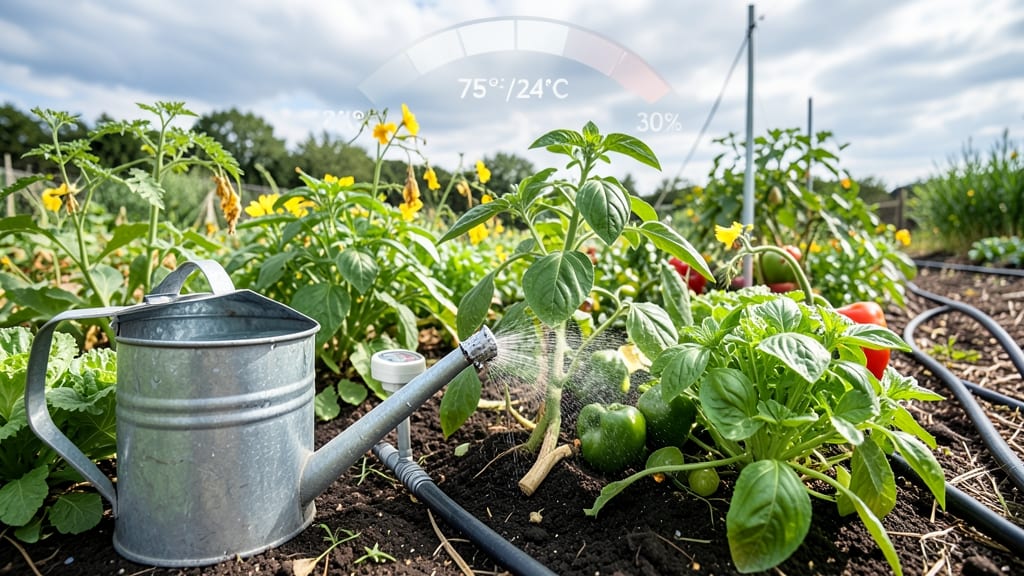
Watering your vegetable garden every day can actually harm more than help—especially when roots suffocate from soggy soil or nutrients wash away.
Overwatering your 🥬 garden can drown roots just as fast as underwatering can stunt growth, so how do you strike the perfect balance? The answer depends on your soil, plants, and even the weather forecast.
Leafy greens like lettuce and spinach need consistent moisture, but heavy feeders like tomatoes and peppers demand deep, infrequent watering. Ignore these differences, and you’ll end up with wilted leaves or moldy soil.
Below, I break down the science of smart watering—when to adjust your schedule, how to check soil moisture like a pro, and the 3 signs your garden is thirsty (or drowning).


How often should you water vegetable gardens for optimal root health?
Watering your vegetable garden isn't just about keeping soil damp—it's about encouraging deep root growth while avoiding waterlogged soil that suffocates roots. The answer to "should I water my vegetable garden every day?" depends on plant type, soil composition, and local climate.
Daily watering might be necessary for leafy greens in summer heat, but it can drown root crops like carrots and potatoes. Let's break down the science-backed approach to watering for root health and harvest success.
Most vegetables thrive when their roots receive 1-2 inches of water per week, delivered through deep watering sessions rather than frequent shallow drinks. This encourages roots to grow downward in search of moisture, creating stronger, more resilient plants.
However, this rule changes based on whether you're growing leafy greens (like lettuce or spinach) versus root vegetables (like beets or radishes). Leafy crops need consistent moisture, while root crops prefer slightly drier conditions to prevent forked or split roots.
Your soil type plays a massive role in watering frequency. Sandy soil drains quickly and may need daily watering in summer, while clay soil holds moisture longer and can go 5-7 days between waterings. Even organic-rich loam—the gold standard for vegetable gardens—balances moisture retention and drainage.
To check your soil's moisture level, stick your finger 1-2 inches deep; if it feels dry, it's time to water. If it's damp, wait another day or two.
Climate zones further complicate the equation. In hot, dry climates (like USDA Zone 9b), daily watering might be necessary during peak summer, while cooler, wetter regions (like Zone 5) may only need watering every 5-7 days.
Even within the same zone, microclimates—like a sunny south-facing bed versus a shaded north side—require different approaches. Always adjust your schedule based on weather forecasts and plant-specific needs.
Here’s the key takeaway: Daily watering is rarely ideal for most vegetable gardens. Instead, aim for deep, infrequent watering that encourages root growth. The exceptions are seedlings, young transplants, and leafy greens during heatwaves. Even then, morning watering is best to reduce evaporation and prevent fungal diseases.
For leafy greens, like lettuce or spinach, daily watering might seem necessary during hot summer days, but even these plants can suffer from overwatering. The key is to water
Daily watering mistakes that kill your vegetable plants (and how to fix them)
Watering your vegetable garden daily might seem like a safe bet, but it’s one of the fastest ways to suffocate your plants. Too much water cuts off oxygen to roots, while too little causes wilting and stress.
The key is understanding plant-specific needs and adjusting based on soil conditions and weather patterns. For example, leafy greens like spinach tolerate more moisture than root crops like carrots, which need drier soil to develop properly.
I’ve seen firsthand how overwatering leads to yellow leaves, moldy soil, and even root rot—a silent killer that turns healthy plants mushy in days. On the flip side, underwatering causes crispy edges, stunted growth, and blossom-end rot in tomatoes.
Both extremes rob you of a bountiful harvest, so let’s fix these mistakes before they ruin your garden.
⚠️ Should I Water My Vegetable Garden Every Day?
No—unless you’re in extreme heat (90°F+) or growing shallow-rooted crops like lettuce. Most vegetables thrive on 1-2 inches of water per week, delivered deeply 2-3 times per week. Daily watering without proper drainage leads to fungal diseases and root suffocation. Instead, check soil moisture by sticking your finger 1 inch deep—if it’s dry, water thoroughly; if it’s damp, wait.
One of the biggest mistakes is light, frequent watering instead of deep, infrequent soaks. This encourages roots to stay near the surface, making plants more vulnerable to drought. To fix this, use a soaker hose or drip irrigation to deliver water slowly to the root zone.
Aim for 6-8 inches deep—this mimics natural rainfall and builds resilient root systems.
Watch for yellowing leaves, a classic sign of overwatering. Unlike nutrient deficiencies (which start at leaf edges), waterlogged roots cause yellowing from the bottom up. If you spot this, reduce watering immediately and improve drainage by adding compost or perlite to heavy soils.
For tomatoes or peppers, yellow leaves often mean blossom-end rot—a calcium deficiency triggered by inconsistent moisture.
Underwatering shows up as wilting that doesn’t recover after watering, or crispy leaf edges. If your plants look sad by mid-afternoon but perk up in the morning, they’re thirsty. Fix this by adjusting your schedule: water deeply in the morning to give roots time to absorb moisture before evaporation.
Mulch with straw or wood chips to lock in moisture and reduce stress on your plants.
For container gardens, daily watering might be necessary in summer, but check soil moisture daily—containers dry out 3x faster than in-ground beds. If your herbs like basil or peppers droop by evening, water them thoroughly and move pots to partial shade to slow evaporation.
Always use pots with drainage holes to prevent root rot.
Remember, consistency is key. Vegetables hate moisture swings—alternating between soggy and dry soil stresses roots. Stick to a regular schedule, monitor your plants’ signals, and adjust based on weather forecasts.
With these fixes, you’ll avoid the most common watering pitfalls and enjoy a garden that’s healthy, productive, and resilient.