
Landscaping
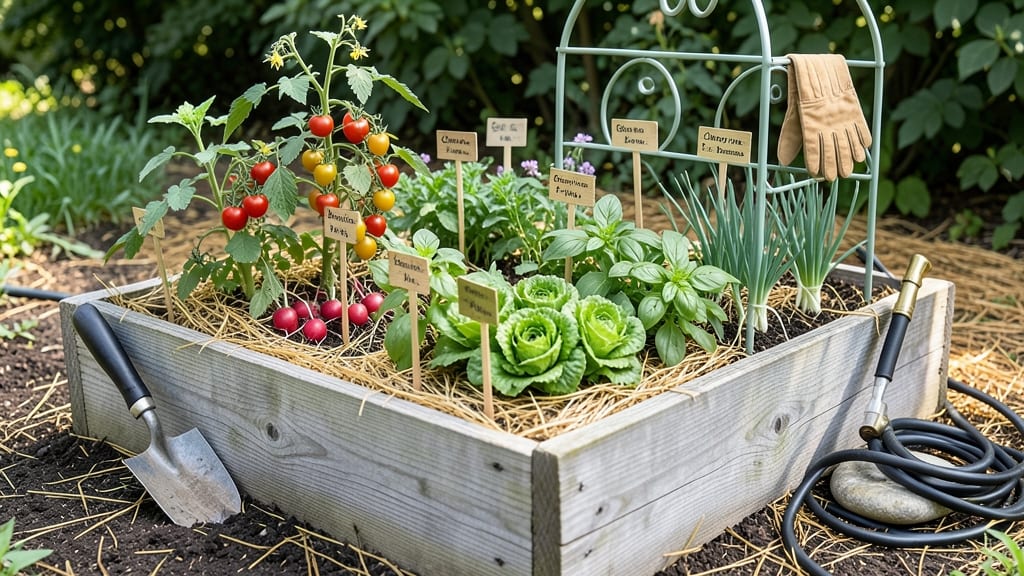
Small backyard vegetable garden design ideas focus on vertical planters, square-foot grids, and tiered raised beds to grow high-yield crops like lettuce, tomatoes, and herbs efficiently in tight spaces while maximizing sunlight and drainage.
Creating a functional small backyard vegetable garden starts with smart space utilization.
Vertical gardening transforms walls and fences into growing space, while square-foot grids let you plant multiple crops in a 4' x 4' area. 🌱 Tiered raised beds add depth without expanding your footprint, and companion planting—like pairing basil with tomatoes—naturally boosts growth.
I’ve found that even a 50-square-foot plot can produce enough for a family of four when designed this way.
For best results, prioritize sun-loving plants in the brightest spots and shade-tolerant varieties in partial shade. Fast-growing crops like radishes or green onions fit perfectly into small gaps, while vining plants thrive on trellises or hanging pots.
The key is balancing aesthetics with productivity—your garden should look intentional while delivering a harvest.
💡 In This Article
- Space-Saving Vegetable Garden Layouts for Compact Backyards
- Best High-Yield Vegetables for Small-Space Gardens
Space-saving vegetable garden layouts for compact backyards
Vertical gardening is one of the most effective ways to transform limited backyard space into a productive growing area. Using trellises for vining plants like cucumbers or pole beans can save up to 70% of ground space compared to bush varieties.
Hanging pots or wall-mounted planters work equally well for herbs and shallow-rooted greens, while stacked planters create a cascading effect that maximizes square footage. The key is positioning these vertical elements along fences, walls, or even pergolas to capture sunlight without blocking access to the garden.
Square-foot gardening takes efficiency further by dividing a 4' x 4' raised bed into a 1-foot grid, allowing you to plant 16 different crops in just 16 square feet.
This method ensures optimal spacing—carrots get 1 plant per square, while leafy greens like lettuce can fit 16 plants per square. The grid system also simplifies crop rotation, reducing soil depletion and pest buildup.
For example, planting tomatoes in one square in spring, then swapping them for bush beans in summer, keeps the same area productive year-round.
Tiered raised beds add depth without expanding your footprint, often doubling your growing capacity in the same footprint. A three-tiered bed with 2' x 4' dimensions per level can accommodate three distinct plantings—one for sun-loving tomatoes, another for partial-shade herbs, and a third for root vegetables.
The staggered design also improves air circulation, reducing fungal diseases like blight. Spiral layouts, where beds curve outward in a spiral, further optimize space by allowing plants with varying sunlight needs to coexist harmoniously.
Sunlight exposure is non-negotiable in small gardens, so orient your layout with the sun’s path. South-facing walls or fences are ideal for vertical gardens, while east-facing beds get morning sun perfect for leafy greens. Avoid placing tall plants in the center of raised beds—this creates shade that stunts growth.
Instead, position taller crops like corn or sunflowers along the edges or use them as natural windbreaks. A well-planned layout ensures every inch of your garden works harder, not just harder.
Drainage is another critical factor often overlooked in compact designs. Raised beds should have at least 6 inches of gravel or sand at the bottom to prevent waterlogging, while vertical planters need drainage holes.
Overwatering in small spaces leads to root rot, so self-watering containers or drip irrigation systems help maintain consistent moisture without waste. The goal is to mimic the natural drainage of larger gardens—even in tight quarters.
For those with under 50 square feet, consider a "stacked" approach: combine a 2' x 4' raised bed with two vertical trellises and a hanging pot for herbs. This setup can produce enough tomatoes, cucumbers, and basil for a family of four while keeping the garden tidy and accessible.
The secret is prioritizing high-value crops that yield well in small spaces—think cherry tomatoes, bush beans, and leafy greens over space-hogging squash or corn.