
Tools
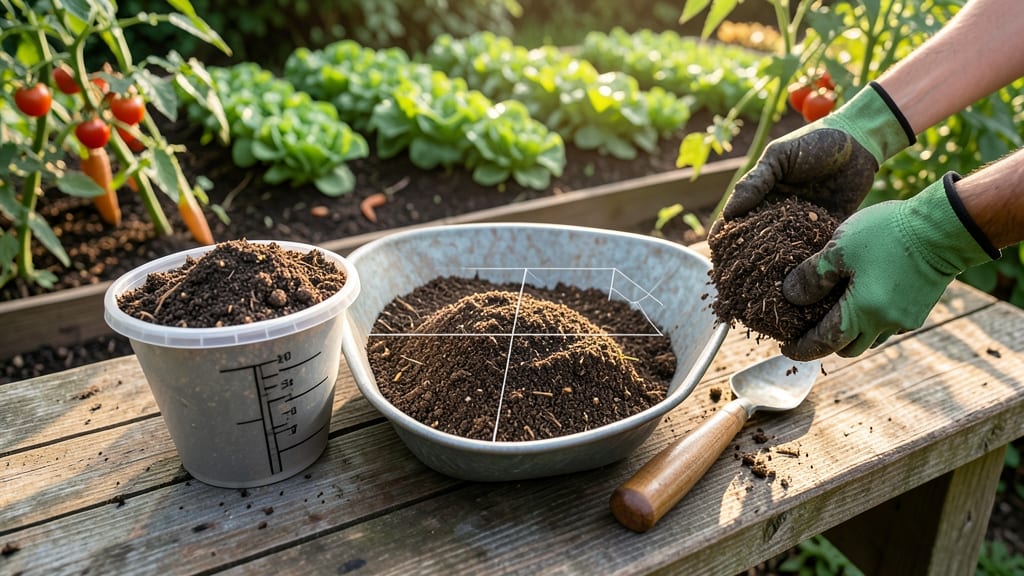
The ideal soil to compost ratio for vegetable gardens is 3 parts soil to 1 part compost, though leafy greens and root vegetables thrive with 4:1, while heavy feeders like tomatoes benefit from 2:1. Adjust ratios based on existing soil quality and plant nutrient needs.
Getting the right mix of soil and compost is like giving your garden a nutrient boost tailored to each plant's needs. 🌱 For most vegetables, the classic 3:1 ratio works wonders, but leafy greens and root crops actually prefer more soil (4:1) to prevent overfeeding.
Meanwhile, heavy feeders like tomatoes crave richer compost (2:1) to support their vigorous growth. The key is testing your soil first—clay soils need more compost to loosen them, while sandy soils benefit from compost's moisture-retaining properties.
Think of compost as the foundation for healthy soil biology.
It introduces beneficial microbes that break down organic matter, creating a sponge-like structure that holds moisture while allowing roots to breathe. 🔥 For example, a compost-heavy mix (like 2:1) for tomatoes provides the nitrogen and phosphorus they need for fruit production, while a soil-heavy mix (4:1) for carrots prevents them from splitting due to excessive nutrients.
Always adjust based on your garden's unique conditions—observing plant health and soil tests will guide you toward the perfect balance.
💡 In This Article
- How Compost Improves Soil Structure and Nutrient Balance
- Customizing Compost Ratios by Vegetable Type and Soil Condition
How compost improves soil structure and nutrient balance
Compost acts as a soil conditioner by physically altering its structure through a process called aggregation. When mixed in, compost introduces organic matter that binds tiny soil particles into larger clumps called aggregates, creating tiny air pockets that improve aeration.
This is especially critical for clay soils, where compost can increase porosity by up to 30%, allowing roots to penetrate more easily. In contrast, sandy soils benefit from compost's ability to hold 3-4 times more water than native soil, reducing moisture loss during hot days. 🌱
The magic happens at the microscopic level through microbial activity. Compost teems with beneficial bacteria and fungi that decompose organic material, releasing nutrients like nitrogen, phosphorus, and potassium in forms plants can absorb. A well-composted mix typically contains 5-10% organic matter, which is the sweet spot for most vegetables.
For example, tomatoes need this higher organic content to support their heavy fruiting, while lettuce thrives with slightly less (3-5% organic matter) to prevent leafy growth from becoming too lush and prone to bolting.
Compost also acts as a natural buffer against soil pH extremes. Most vegetable crops prefer a slightly acidic to neutral pH (6.0-7.0), and compost helps maintain this balance by slowly releasing minerals.
The humic acids in compost can even chelate (bind to) essential nutrients like iron and zinc, making them more available to plant roots. This is why compost-amended soil often shows 20-30% higher nutrient availability compared to unamended soil, even when using the same fertilizer amounts. 🔥
One often overlooked benefit is compost's role in improving soil's cation exchange capacity (CEC). This refers to the soil's ability to hold and release nutrients like calcium, magnesium, and potassium.
A compost-rich soil can have 2-3 times higher CEC than native soil, meaning plants have a steady supply of nutrients even during dry periods. For instance, peppers—which are sensitive to nutrient fluctuations—grow more uniformly in compost-amended soil because the CEC acts like a nutrient reservoir.
To visualize the difference, consider this comparison: A sandy loam with 1% organic matter might hold 0.5% available nitrogen, while the same soil with 5% organic matter (from compost) could hold 2.5% available nitrogen.
This explains why plants in compost-rich soil often show 30-50% faster growth in early stages, as they have immediate access to nutrients without relying solely on slow-release mineral fertilizers. 💫
For gardeners working with poor-quality soil, the transformation is dramatic. I've seen compacted clay soil go from being nearly impenetrable to crumbly and workable after just one season of regular compost additions.
The key is consistency—compost doesn't work miracles overnight, but over time, it creates the ideal growing medium where roots can spread freely, microbes thrive, and plants access exactly what they need. 🌟