
Neem Oil
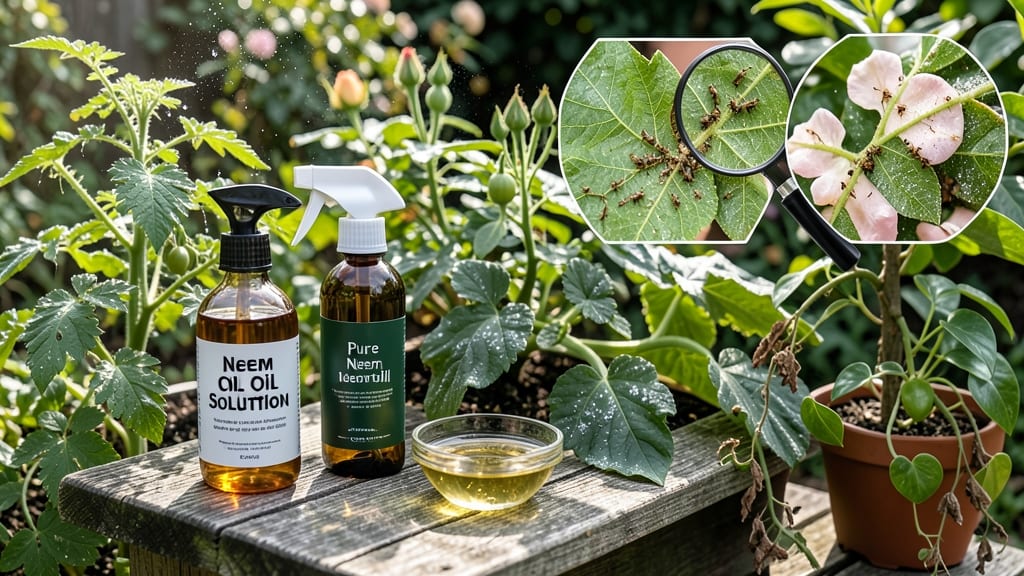
Neem oil has many uses for neem oil in the garden as a powerful organic solution for managing pests like aphids, mites, and whiteflies, as well as combating fungal diseases such as powdery mildew and black spot. Its natural compounds make it an eco-friendly alternative that protects plants without harming beneficial insects.
Neem oil's magic comes from its active compounds—azadirachtin and nimbin—which disrupt insect life cycles by interfering with feeding, molting, and reproduction. 🌿 Unlike synthetic pesticides, it doesn't leave toxic residues, making it safer for your garden ecosystem.
For fungal issues, it creates a protective barrier on plant leaves, preventing spore germination. I've found it particularly effective when used as a preventive spray before pests appear, rather than waiting for an infestation.
When applying neem oil, always dilute it properly—typically 1-2 teaspoons per quart of water—and spray during early morning or late evening to avoid harming bees. For stubborn fungal infections, a soapy solution (1 teaspoon mild soap per quart) can enhance adhesion.
The key is consistency: reapply every 7-14 days or after rain to maintain protection.
💡 In This Article
- How Neem Oil Works Against Garden Pests and Fungi
- Step-by-Step Neem Oil Application Guide for Gardeners
How neem oil works against garden pests and fungi
The real power of neem oil lies in its complex chemistry, particularly azadirachtin and nimbin, which act like a multi-pronged attack on pests and fungi. Azadirachtin, found in neem seeds, disrupts insect hormones by mimicking juvenile hormones, preventing proper molting and reproduction.
This means aphids, mites, and whiteflies can't mature or reproduce, breaking their life cycles within days. 🌱 The compound also reduces feeding activity by up to 70% in some insects, starving them out over time.
For fungi, neem oil works differently—it creates a protective film on plant surfaces that physically blocks fungal spores from germinating. Studies show it can inhibit powdery mildew spores by 90% when applied preventatively.
The oil's fatty acids penetrate fungal cell membranes, disrupting their structure. Unlike chemical fungicides, neem oil doesn't leave harmful residues, making it safe for edible plants even at harvest time when used correctly.
What's fascinating is how neem oil acts as a systemic treatment when applied properly. When sprayed on leaves, the oil's compounds are absorbed into the plant's vascular system, offering protection from within. This is why a single application can provide 7-14 days of protection—much longer than many synthetic sprays.
The oil's bitter taste also acts as a natural repellent, deterring pests before they even make contact with your plants.
However, the effectiveness depends on proper application timing. Neem oil works best when pests are in their larval stages or when fungal spores are just beginning to develop.
For example, applying it at the first sign of black spot on roses can prevent full-blown infections, whereas waiting until leaves are heavily spotted reduces its efficacy. The oil's volatility means it breaks down in sunlight, so morning or evening applications maximize its lifespan on plant surfaces.
One often-overlooked benefit is neem oil's ability to strengthen plant immunity. Research shows it stimulates plants to produce phenolic compounds, which act as natural defense chemicals. This means treated plants not only resist pests better but also recover faster from damage.
The oil's antimicrobial properties also help prevent secondary infections that often follow pest attacks, creating a healthier overall plant ecosystem.
For gardeners dealing with resistant pests, combining neem oil with other organic methods like companion planting (e.g., marigolds repelling nematodes) or beneficial insects (like ladybugs for aphids) creates a more robust defense system.
The key is understanding that neem oil isn't a quick fix—it's a preventative tool that works best as part of an integrated pest management strategy.