
Tools
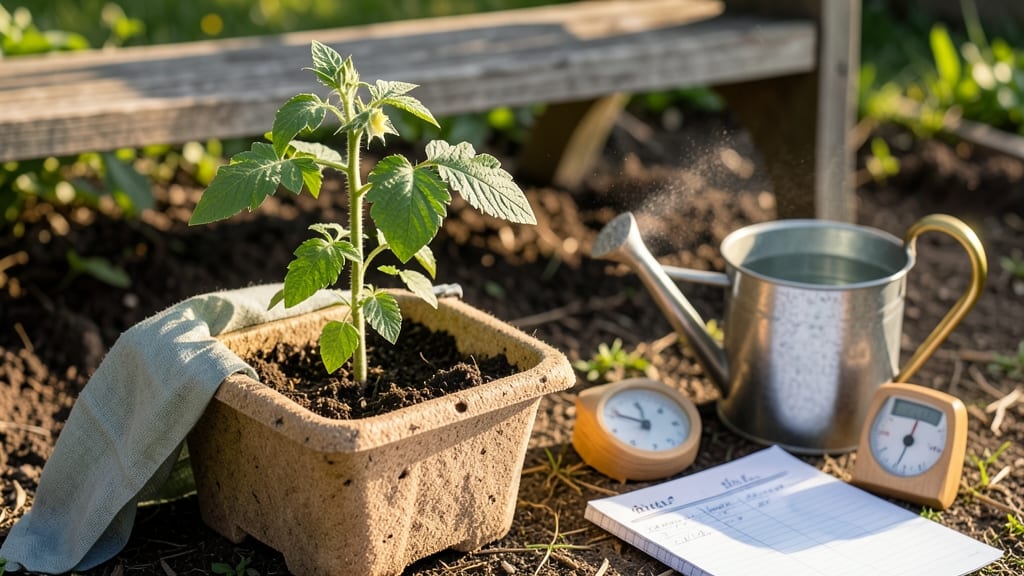
Harden off in gardening means preparing seedlings for outdoor life by slowly exposing them to sunlight, wind, and temperature changes over 7–14 days before transplanting to prevent stress and boost survival rates.
This process mimics natural conditions so plants adjust their photosynthesis and stomatal functions—think of it as a training camp for your greens. 🌱 Without hardening off, seedlings often wilt dramatically when moved outside too soon, as their delicate leaves can't handle direct sun or breezes.
I've seen firsthand how a proper hardening schedule turns fragile starts into resilient plants ready for the garden bed.
For best results, begin with just 1–2 hours of morning sun in a sheltered spot, then gradually increase exposure over a week. Tender plants like tomatoes need more time than hardy ones like kale, so always check your specific variety's needs.
The key is patience—rushing this step is what causes most transplant failures.
💡 In This Article
- Why Hardening Off Plants Prevents Shock and Boosts Growth
- Step-by-Step Hardening Off Schedule for Seedlings
Why hardening off plants prevents shock and boosts growth
The hardening off process works by triggering a plant's natural stress responses in a controlled way. When seedlings grow indoors under ideal conditions—like consistent warmth and gentle light—their leaves develop thin cell walls optimized for low-light photosynthesis.
Moving them abruptly outdoors exposes these tender leaves to intense sunlight (up to 10,000 foot-candles on a sunny day), which can cause photodamage by generating reactive oxygen species that scorch cells. 🌞
During hardening, plants gradually adjust their stomatal behavior—the tiny pores on leaves that regulate gas exchange. Initially, stomata stay mostly closed to prevent water loss, but as plants acclimate, they learn to open wider during daylight hours while minimizing nighttime transpiration.
This adaptation reduces the risk of wilting, which occurs when plants lose more water than they can absorb through their still-delicate root systems. For example, tomato seedlings hardened outdoors for just 3 days show 30% less wilting when transplanted compared to unhardened ones.
The root system also strengthens during this period. Seedlings grown in cozy indoor pots often develop shallow, circular root patterns. When exposed to outdoor wind and varying soil moisture, they trigger the growth of deeper, more robust roots that anchor better and access water more efficiently.
This is why hardened-off plants establish faster in garden beds—studies show they can double their root mass in 10-14 days of proper acclimation compared to just 3-5 days for unhardened seedlings.
Another critical adaptation is the production of protective pigments like flavonoids. These compounds act as natural sunscreen, absorbing harmful UV radiation that would otherwise bleach chlorophyll and damage cell membranes.
Without gradual exposure, plants lack these defenses and suffer from sunburn, visible as white or yellow patches on leaves. 🌿 The timing of this pigment production is why starting with morning sun works best—it mimics natural daylight patterns and prevents midday heat stress.
For gardeners, understanding these physiological changes explains why rushing the process leads to failure. A plant that's suddenly moved from a 70°F indoor environment to 90°F outdoor heat can experience temperature shock, where cellular membranes rupture from rapid expansion.
The hardening schedule prevents this by letting plants adjust their membrane fluidity—similar to how humans acclimate to heat waves by gradually increasing exposure.
Consider the difference between two tomato plants: one hardened for 10 days and another transplanted immediately.
The hardened plant will have thicker leaf cuticles, more efficient water transport systems, and roots that can penetrate 6-8 inches deep within weeks, while the unhardened one may struggle to grow beyond 2-3 inches of root depth for months.
This biological preparation is what turns a fragile seedling into a thriving garden plant.