
Tools
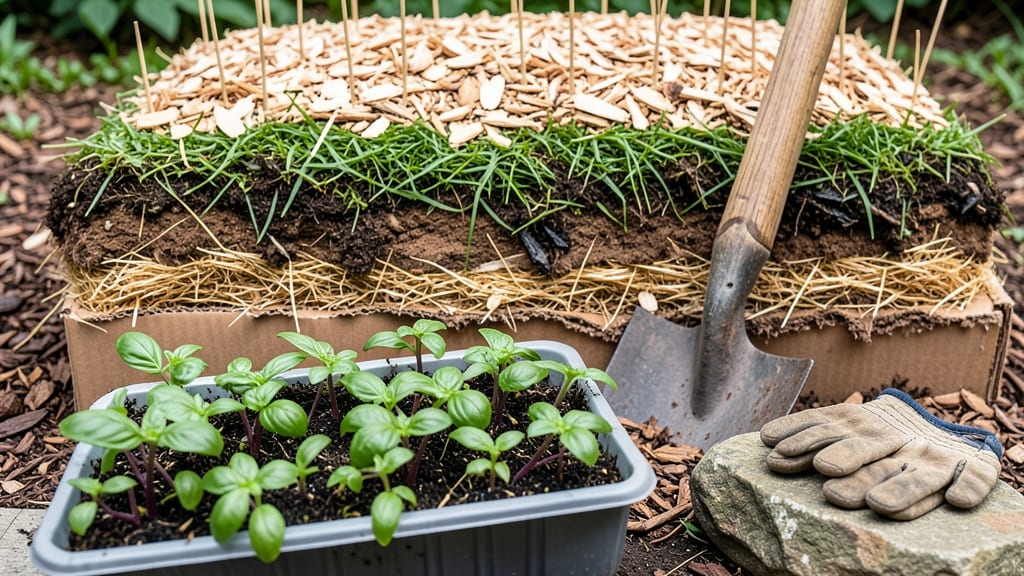
Lasagna gardening is a zero-waste planting method where organic materials like grass clippings, leaves, and kitchen scraps are layered in sheets to create nutrient-rich soil beds without tilling. It mimics composting while building fertile garden plots over time.
Lasagna gardening transforms yard waste and kitchen scraps into rich garden beds through a simple layering technique. 🌱 The process mimics natural decomposition, breaking down materials into fertile soil while suppressing weeds and retaining moisture.
Unlike traditional tilling, this method preserves soil structure and microbial life, creating a sustainable foundation for plants. I've found it particularly effective in areas with poor soil quality, as the layers gradually improve drainage and nutrient availability over seasons.
This approach works best with a balance of "browns" (carbon-rich materials like newspaper or straw) and "greens" (nitrogen-rich items such as grass clippings or vegetable scraps). The decomposition process generates heat, which helps kill weed seeds and pests naturally.
For optimal results, I recommend starting in early spring or fall, allowing time for the layers to settle before planting.
💡 In This Article
- How Lasagna Gardening Builds Soil Naturally
- Best Materials for Lasagna Garden Layers
How lasagna gardening builds soil naturally
Lasagna gardening works by replicating nature's own composting process in horizontal layers, creating what's essentially a self-contained ecosystem. The key lies in the decomposition of organic materials, which releases nutrients while improving soil structure.
When you layer materials like carbon-rich "browns" (such as shredded leaves or cardboard) with nitrogen-rich "greens" (like grass clippings or coffee grounds), you create the perfect environment for microbes to break down the matter.
This process generates heat—sometimes reaching 140-160°F—which not only accelerates decomposition but also sterilizes the soil by killing weed seeds and pathogens.
The carbon-to-nitrogen ratio is critical—ideal layers maintain approximately a 30:1 ratio of browns to greens. Too much nitrogen creates smelly ammonia, while too much carbon slows decomposition. Think of it like a balanced diet for your soil: browns provide the structure (like fiber), while greens supply the energy (like protein).
For example, a layer of 2-3 inches of shredded newspaper (carbon) topped with 1 inch of grass clippings (nitrogen) creates the perfect microclimate for microbial activity. This balance also improves water retention, as the decomposed materials form a spongy texture that holds moisture like a well-maintained sponge.
One of the most impressive benefits is how lasagna gardening suppresses weeds naturally. The thick layers of organic matter block sunlight from reaching weed seeds, preventing germination.
This is especially useful in early stages when you're building the bed—you can plant directly into the top layers once they've settled and decomposed enough to support roots. The process also enhances soil aeration over time, as the decomposing materials create tiny air pockets that improve root growth.
Unlike tilling, which disrupts soil structure, lasagna gardening preserves beneficial organisms while gradually transforming the area into rich, loamy soil.
Seasonal timing plays a role in how quickly your lasagna garden matures. Starting in early spring allows the layers to decompose gradually over the growing season, while fall planting gives materials time to break down over winter.
The decomposition rate also depends on moisture levels—keep the layers damp (like a wrung-out sponge) to speed up the process. For instance, in my own garden, a lasagna bed built in April was ready for planting by June, with tomatoes thriving in the enriched soil.
The visual transformation is striking: what starts as a rough pile of scraps becomes a dark, crumbly soil bed within months.
What most people don't realize is how lasagna gardening mimics the natural forest floor ecosystem. In a forest, fallen leaves and branches decompose in layers, creating rich humus that supports plant life. Your lasagna garden replicates this process on a smaller scale, but with the added benefit of customization.
You can adjust the materials based on what's available—whether it's kitchen scraps, yard waste, or even straw from local farms. This adaptability makes it a sustainable solution for urban gardeners with limited space or rural homesteaders looking to reduce waste.
Consider the sensory experience: as you build your lasagna bed, you'll notice the earthy aroma of decomposing leaves mixed with the fresh scent of green grass clippings. Over time, this transforms into a rich, loamy fragrance—similar to a well-aged compost pile but more controlled.
The texture changes too, from coarse layers of cardboard and straw to a fine, almost velvety soil that's perfect for planting. This tactile feedback is one of the most rewarding aspects of lasagna gardening.