
Tools
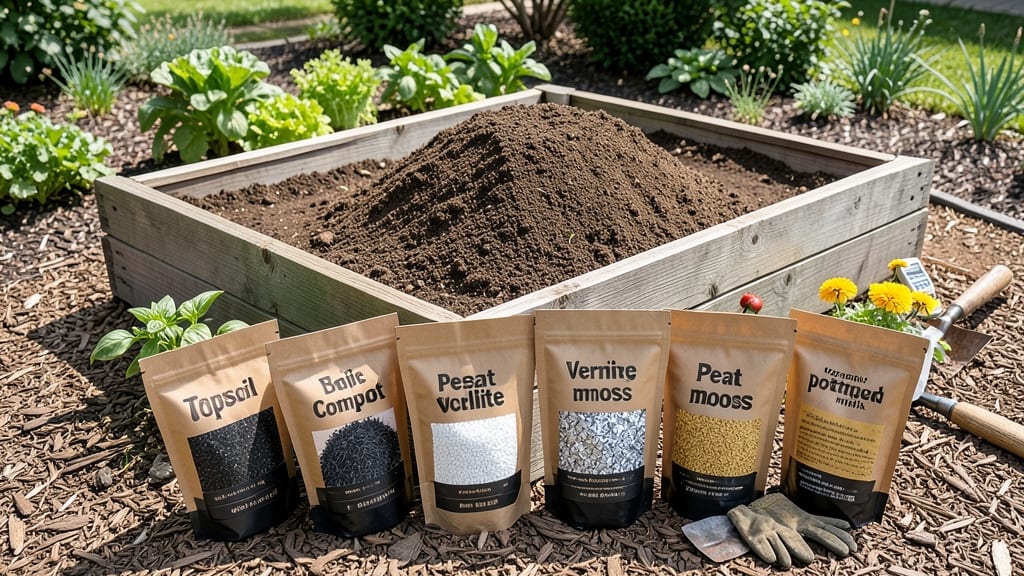
For a raised garden bed, you should put a balanced soil mix of 60% topsoil, 30% compost, and 10% perlite or coarse sand to create optimal drainage and nutrient retention. This combination prevents compaction while supporting strong root development.
This specific ratio works because it combines the nutrient-rich organic matter from compost with the structural support of topsoil and perlite. 🌱 The perlite or sand prevents soil from becoming too dense, which is especially important in raised beds where water drainage is critical.
Many gardeners also add a handful of worm castings for extra microbial activity, though this isn't always necessary if your compost is high-quality.
One common mistake is using pure garden soil, which can compact over time and reduce aeration. The raised bed environment requires lighter, fluffier soil that mimics the natural loam found in wild forest floors.
For heavy feeders like tomatoes, you might increase the compost ratio to 40% for extra nutrients, while delicate plants like lettuce thrive with the standard 30% blend.
💡 In This Article
- Ideal Raised Garden Bed Soil Composition and Science
- DIY Raised Garden Bed Soil Mix Recipes for Different Plants
Ideal raised garden bed soil composition and science
The perfect raised garden bed soil isn't just dirt—it's a carefully engineered ecosystem that balances three critical components: topsoil, compost, and an amendment like perlite or sand. Topsoil provides the structural foundation, containing roughly 45% mineral particles (sand, silt, clay) that create pore spaces for air and water movement.
These mineral particles act like tiny sponges, holding moisture while allowing excess to drain away. The ideal texture for raised beds falls in the loamy range, where sand (40%), silt (40%), and clay (20%) combine to create a crumbly, almost cake-like consistency when moist.
Compost contributes the organic matter that feeds your plants and beneficial microbes. High-quality compost breaks down into humus, which improves soil structure by binding particles together while maintaining air pockets.
A 30% compost ratio provides enough nutrients for most vegetables without overwhelming plants with too much nitrogen, which can burn roots.
Think of compost as the "glue" that holds the soil together while also feeding the microbial life that decomposes organic material into plant-available nutrients. 🌱 The microbial activity also helps prevent soil-borne diseases by outcompeting harmful pathogens.
The final 10% perlite or coarse sand acts as the soil's circulatory system, preventing compaction that would suffocate roots. Perlite, a volcanic glass, expands when heated to create lightweight, porous particles that improve aeration without adding bulk.
Coarse sand (with particles 0.5-1mm) works similarly but may require more frequent replenishment as it breaks down over time. This amendment is particularly crucial in raised beds where water drains faster than ground-level soil, as it helps retain moisture near roots while preventing waterlogging.
Texture matters because different plants have specific needs. Heavy feeders like tomatoes benefit from slightly finer soil that holds nutrients, while root vegetables such as carrots need loose, sandy soil to grow straight and unobstructed.
The 60-30-10 ratio strikes a balance for most plants, but you can adjust based on your garden's specific requirements. For example, adding 20% coconut coir instead of perlite creates a more moisture-retentive mix ideal for arid climates.
One often-overlooked factor is the soil's cation exchange capacity (CEC), which measures its ability to hold nutrients. Organic matter from compost increases CEC, allowing plants to access nutrients like potassium and magnesium over time.
In contrast, pure mineral soil has low CEC and releases nutrients too quickly. This is why gardeners often add 1-2 inches of compost annually—it replenishes the organic matter that naturally breaks down over time.
To test your soil's readiness, perform a simple squeeze test: Grip a handful of moist soil—it should hold its shape slightly but crumble when gently pressed. If it forms a tight ball, add more perlite or sand.
If it falls apart completely, increase the compost ratio. This tactile feedback helps you fine-tune the mix before planting, ensuring your raised bed soil works as hard as you do. 💫