
Picking
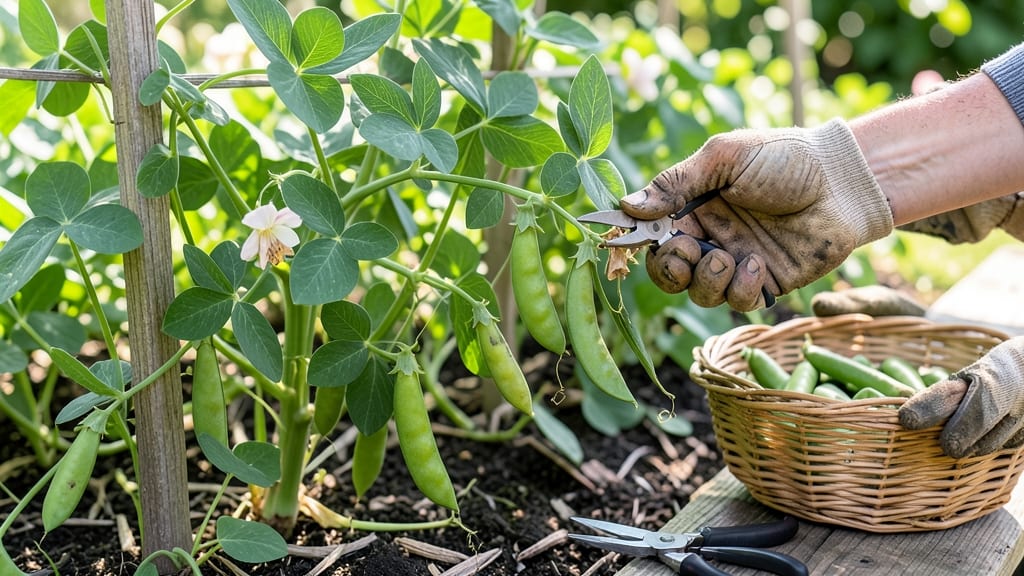
Harvest garden peas when pods are 1-2 inches long and plump, about 60-70 days after planting, for the sweetest flavor.
Picking them too early means tiny, underdeveloped peas, while waiting too long turns them mealy and tough. The key is timing—harvest in the morning when pods are cool and crisp for the best texture.
Look for pods that are slightly swollen but still firm, with peas visible inside but not overcrowded. Shelling peas? Wait until the pods start yellowing and drying out for a later harvest.
Below, I’ll break down 3 foolproof size checks, when to harvest for continuous production, and how to avoid common mistakes that ruin flavor.


3 Exact size checks to harvest garden peas at peak sweetness
Harvesting garden peas at the right moment transforms your garden into a sweetness factory. The difference between tender, flavorful peas and tough, starchy ones often comes down to three precise size checks that reveal when pods are at their prime.
These checks—pod length, seed development, and shell firmness—work together like a culinary recipe, ensuring every pea you pick delivers maximum flavor.
Peas mature quickly, so timing is everything. Waiting even a day past the ideal harvest window can turn your sweet harvest into a mealy disappointment. The good news? These science-backed measurements take seconds to perform and eliminate guesswork.
Whether you're growing sugar snap peas, snow peas, or traditional shelling peas, these checks apply universally to guarantee peak tenderness and sweetness every time.
Measure from stem to tip—ideal pods should be fully swollen but not elongated beyond 2 inches. Varieties like 'Sugar Ann' and 'Oregon Sugar Pod' peak at 1.5 inches.
Peas should be clearly visible through the pod but not overcrowded. Press gently—seeds should yield slightly without feeling hard or shriveled.
A firm but slightly tender pod indicates peak ripeness. Overripe pods feel dry and papery, while underripe ones are rock-hard. Test 3-4 pods daily for consistency.
Start by examining the pod length—this is your first clue. Most garden pea varieties reach harvest readiness when pods measure between 1 to 2 inches. For example, 'Sweet Snap' peas are perfect at 1.5 inches, while 'Mammoth Melting Sugar' can stretch to 2 inches before losing tenderness.
Use a ruler or compare pods to a quarter-inch measuring tool for precision. If pods exceed 2.5 inches, they’ve passed their prime.
The second check focuses on seed development inside the pod. Hold the pod up to natural light and look for peas that fill 70-80% of the pod’s interior. At this stage, seeds should be clearly visible but not jammed together.
If you can see empty space, the peas need more time; if seeds feel hard when pressed, they’ve overripe. This check is especially critical for sugar snap peas, where overfilling leads to a woody texture.
Don’t overlook the shell firmness test, which reveals the pod’s internal condition without opening it. Gently squeeze the pod between your thumb and forefinger—it should feel firm with a slight give, like a ripe avocado.
If the pod resists pressure entirely, it’s underripe; if it feels dry or crumbly, the peas have overstayed their welcome. Pro tip: Harvest on cool mornings when pods are most hydrated, making the firmness test more accurate.
Regional growing conditions can tweak these measurements slightly. In hotter climates (Zones 8-10), pods may mature faster and require harvesting when they reach 1 inch instead of 1.5 inches. Conversely, in cooler zones (Zones 3-5), pods might need an extra day or two to reach full sweetness.
Always adjust your checks based on your local average daily temperature—peas grown in 70°F+ weather tend to ripen quicker than those in 60°F ranges.
For shelling peas, add a fourth visual cue: the leaf color. When the lower leaves begin to yellow and dry out, it’s a signal that the plant is redirecting energy to seed production.
This often coincides with the perfect harvest window for shelling varieties like 'Green Arrow' or 'Lincoln'. However, don’t rely solely on leaves—always cross-reference with the three size checks to avoid missing the sweet spot.
Harvesting at the right size isn’t just about flavor—it’s about encouraging continuous production. Pea plants produce new flowers and pods as you remove mature ones. If you wait too long, the plant shifts energy into seed maturation, reducing future yields.
Aim to harvest every 2-3 days during peak production to keep your plants focused on growth rather than seed hardening.
Use a sharp pair of pruning shears or your fingers to snap pods cleanly at the stem. Avoid tearing the vine, which can damage the plant’s ability to produce more peas.
For sugar snap peas, harvest the entire pod, while shelling peas can be picked by hand once the pod is ready. Store harvested peas in the refrigerator for up to 5 days to preserve their sweetness and crispness.
Remember, the earlier you harvest, the sweeter the peas. Pods left on the vine for even an extra day can develop starchy compounds that dull flavor.
By mastering these three size checks, you’ll transform your garden into a machine for producing homegrown sweetness that rivals store-bought quality—every single time. 🌱
How to tell when peas are overripe (and why it ruins flavor)
Overripe peas transform from sweet, tender bites to tough, dry, and sometimes bitter disappointments. The moment you miss the perfect harvest window, peas begin converting sugars into starches, making them mealier and less flavorful.
Worse yet, the pods harden and seeds inside develop a chalky texture that’s nearly impossible to salvage.
Recognizing overripe peas relies on both visual cues and tactile tests. A quick glance at your pea plants can reveal whether you’ve waited too long—or if you’re still in the sweet spot. Let’s break down the key warning signs so you never sacrifice flavor again.
⚠️ Overripe Peas = Flavor Disaster
When peas stay on the vine past their prime, they lose 70% of their natural sweetness within just 3-5 days. The pods turn dry and papery, seeds harden, and the entire plant may stop producing. Here’s how to catch it early:
- 🟣 Dry, wrinkled pods – No longer plump or glossy
- ⚪ Yellowing or brown seeds – Visible through the pod
- 🔒 Hard, unyielding texture – Pods don’t bend when pinched
One of the first visual red flags is the pod color. Fresh peas have vibrant green pods with a slight sheen. Overripe peas develop a dull, matte finish and may even take on a yellowish or brownish tint.
This color shift signals the peas have lost moisture and are past their peak.
Don’t rely solely on looks—touch is your best tool. Gently press a pod between your thumb and forefinger. A ripe pea pod should yield slightly, like a firm but tender grape.
Overripe pods feel wooden and hollow, almost like they’ve been left in the sun too long. If the pod snaps instead of bending, it’s a clear sign you’ve waited too long.
The inside of the pod tells the real story. At peak ripeness, peas inside are plump and bright green, filling the pod but not overcrowded.
Overripe peas inside are shriveled, pale, or even starting to split from the pod. Some varieties develop hard, starchy seeds that lose their natural sweetness entirely.
If you’ve missed the window, don’t despair—harvest the pods anyway. While they won’t be ideal for fresh eating, you can still use them for soups, stews, or freezing.
But for the best flavor, aim to harvest within 2-3 days of peak ripeness. Regular checks every 2-3 days ensure you never let peas overstay their welcome on the vine.