
Picking
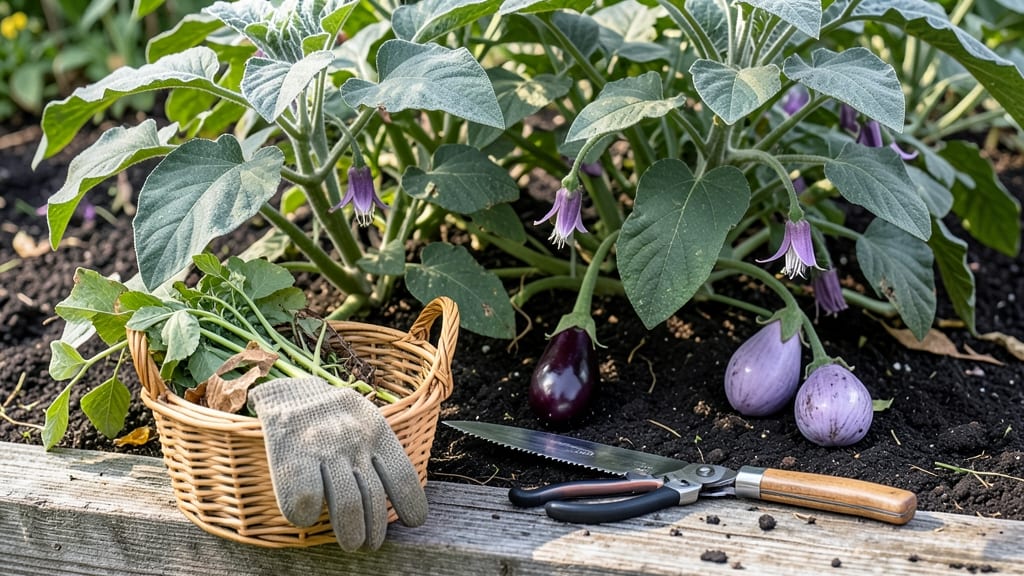
To pick eggplant from your garden at the perfect time, watch for deep color, firm skin, and a dry calyx—these three cues mean the difference between a meal-worthy fruit and a bitter, seedy disappointment.
Harvesting too early means tough skin and bland flavor, while waiting too long turns them woody and seedy. I’ve learned the hard way that even a few extra days can ruin an otherwise perfect crop.
Eggplant 🍆 ripens fastest in warm climates, like Zone 6a, where summer heat speeds up maturity. But cooler regions may need patience—color alone isn’t enough to judge readiness.
Below, I’ll break down the exact visual cues to look for, how climate affects timing, and what to do if your plants keep producing long after the first frost.
3 Visual cues to identify perfectly ripe eggplant
Harvesting eggplant at the right moment ensures the best flavor and texture, but many gardeners struggle to know exactly when to pick. The key lies in three simple visual cues that reveal peak ripeness.
I’ve learned from experience that ignoring these signs can lead to eggplants that are either too seedy or bitter. Let’s break down what to look for in your garden to avoid these common mistakes.
First, pay attention to the color of the eggplant. While most varieties turn a deep purple or black when ripe, some like ‘White Eggplant’ or ‘Rosa Bianca’ mature to creamy white or pale pink.
The color should be uniform and vibrant, not patchy or dull. This consistency is your first clue that the eggplant is ready for harvest.
Next, check the size and firmness. A perfectly ripe eggplant typically measures between 6 to 8 inches in length, though larger varieties like ‘Black Beauty’ can grow bigger.
Gently press the skin—it should feel firm but slightly yielding, like a ripe avocado. If it’s rock-hard or mushy, it’s not ready yet.
Finally, examine the stem end (calyx). When ripe, the calyx should turn yellow or brown and feel dry. If it’s still green and soft, the eggplant needs more time on the vine. This is one of the most reliable indicators of ripeness, especially for varieties with glossy skins.
- 1 Color Uniformity: Deep, consistent purple, black, or variety-specific hue (no green patches). Avoid dull or uneven coloring.
- 2 Size and Firmness: 6-8 inches long, skin yields slightly to gentle thumb pressure (not rock-hard or mushy).
- 3 Stem End (Calyx): Dried, yellow/brown calyx (not green). If still green, the eggplant isn’t fully ripe.
One mistake I see often is waiting too long for eggplants to turn their final color. Some varieties, like ‘Ichiban,’ stay green at the stem end even when ripe. Instead of relying solely on color, combine all three cues for accuracy.
For example, a deep purple eggplant with a green calyx might still need a few more days on the vine.
Another common error is harvesting eggplants that are too small. While they might look ripe, undersized eggplants often have thin skins and bitter flavors.
Aim for the full 6-8 inch range unless you’re growing a dwarf variety like ‘Fairy Tale,’ which matures smaller but still needs firmness and color consistency.
If you’re growing eggplants in hot climates, they may ripen faster due to intense sunlight. In cooler regions, ripening slows down, so monitor the calyx closely.
Pro tip: Use a small notebook to track the ripening progress of your plants—note the date when the calyx turns yellow and the color deepens. This helps you predict future harvests more accurately.
For varieties like ‘Rosa Bianca’ or ‘Casaba,’ the ripeness cues are slightly different. These eggplants mature to a creamy white or pale hue, and their calyx may stay green longer.
Always prioritize the firmness test and size over color alone. If you’re unsure, it’s better to harvest a little early—they’ll continue ripening indoors for a day or two.
Finally, avoid the temptation to leave eggplants on the vine past their prime. Overripe eggplants develop seeds and a woody texture, making them less enjoyable to eat. Once you’ve confirmed all three cues—color, size/firmness, and calyx—grab your pruners and harvest.
Use a sharp knife to cut the stem, leaving a small portion attached to the plant to prevent disease.
With these three visual cues, you’ll never second-guess when to pick eggplant again. Happy harvesting! Your garden—and your dinner table—will thank you. 🍆🌱
How eggplant color changes as it rises (and when to stop waiting)
Eggplant 🍆 doesn’t ripen like tomatoes—it never turns red or softens dramatically. Instead, its color transformation is subtle but critical. Young eggplants start green and glossy, gradually deepening to their mature hue over 60-90 days.
The exact timing depends on your USDA zone and sunlight exposure, with Zone 6a plants typically reaching maturity by mid-summer.
In hot climates (Zones 8-10), eggplants may darken 2-3 weeks faster due to intense sunlight accelerating chlorophyll breakdown. Cooler regions (Zones 3-5) see slower color development, sometimes requiring 10-14 extra days for full maturity.
This regional variation explains why some gardeners in northern states harvest eggplants with lighter hues—they’re simply not fully mature yet.
Here’s the stage-by-stage progression most varieties follow:
- Early Stage (1-2 weeks): Green with slight gloss, calyx remains green and firm
- Mid-Stage (3-4 weeks): Color begins deepening (purple/black/white), calyx turns yellowish
- Late Stage (5-6 weeks): Full mature color, calyx fully brown/dry, skin yields slightly
| Maturity Stage | Color Progression | Calyx Condition | Firmness Test | Harvest Ready? |
|---|---|---|---|---|
| Early Growth | Green with slight tint | Green, firm | Rock-hard | ❌ No |
| Mid-Ripening | Deepening color (purple/white) | Yellowing, slightly dry | Firm but yielding | ⚠️ Maybe (check size) |
| Full Maturity | Deep, uniform color | Brown/dry | Slightly yielding | ✅ Yes |
Sunlight plays a crucial role in this process. Eggplants grown in partial shade may develop lighter colors and take longer to ripen. For example, a ‘Black Beauty’ in full sun will achieve its deep purple hue in 70-75 days, while the same variety in 50% shade might stay bluish-purple and require 85+ days to fully mature.
One common mistake is assuming all eggplants follow the same color pattern. Varieties like ‘Rosa Bianca’ mature to creamy white, while ‘Ichiban’ stays green at the stem end even when ripe. Always combine color with the calyx dryness test—this is your most reliable indicator, regardless of variety.
If the calyx is dry but the color seems off, harvest anyway—the eggplant will continue ripening indoors for 1-2 days.
For gardeners in short-season climates, prioritize harvesting when the eggplant reaches 70% of its mature color and the calyx is drying. Waiting for full color in these regions often means risking first frost damage.
In warmer zones, you can afford to wait for full color development, but never let the calyx turn completely brown—this signals overripeness and woody texture.
Remember: eggplants won’t get sweeter after picking like tomatoes. The goal is to harvest at peak firmness and color—no later. Once you master these color cues, you’ll transform your garden’s yield from bitter disappointments to tender, flavorful treasures. 🌱☀️