
Planting
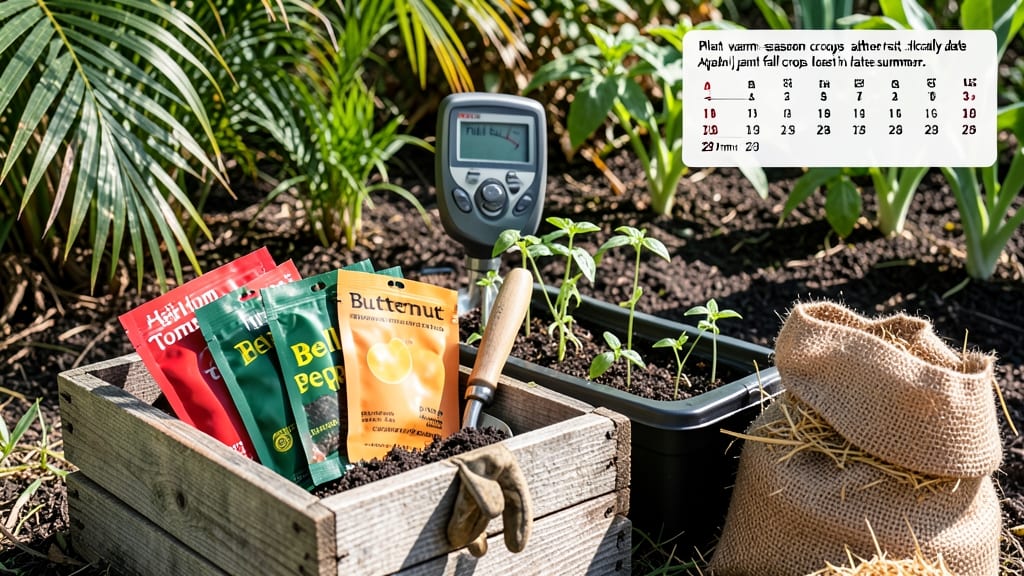
Planting a garden in Florida requires timing that works with its microclimates and unpredictable weather—because what works in the Panhandle won’t survive a Miami summer.
That’s the challenge: Florida’s year-round growing season means you can plant almost anything, but the wrong timing leads to heat stress, pests, or wasted seeds. For example, cool-season crops like broccoli in South Florida’s 90°F+ heat? They bolt faster than you can say "hurricane season."
Below, I break down the exact months to plant by zone—North, Central, and South—plus how to adjust for rain delays, humidity spikes, and even hurricane prep. No more guessing whether your tomatoes will set fruit or your herbs will wilt by noon.
You’ll learn which crops thrive in Florida’s fall planting window, how to read soil temperature like a pro, and the one mulching trick that saves 30% more water during dry spells. Let’s get your garden on the right schedule.
Florida planting calendar by microclimate zone (north vs South vs Central)
Florida’s gardening seasons don’t follow a simple north-to-south pattern. Instead, the state’s three distinct microclimate zones—North Florida (Panhandle), Central Florida, and South Florida—dictate when to plant for optimal success.
North Florida’s cooler winters allow cool-season crops, while South Florida’s tropical climate thrives with heat-tolerant varieties year-round. Even Central Florida splits between these extremes, making timing everything.
Hurricane season (June–November) adds another layer of complexity. Planting too close to storms risks seedling damage or nutrient runoff from heavy rains. In North Florida, aim to establish plants 6–8 weeks before the first expected storms, while South Florida gardeners should prioritize fast-growing varieties or use row covers for protection.
Let’s break down the ideal planting windows for each zone.
North Florida’s cooler winters (USDA Zones 8a–9a) let you grow cool-season crops like broccoli and peas from October through March. However, tomatoes and peppers must wait until mid-March to avoid late frost damage.
In my own Panhandle garden, I’ve learned to start warm-season seedlings indoors in February to get a jump on the 100-day growing season before summer heat peaks.
Central Florida (Zones 9a–10a) offers a longer growing window but requires careful timing. Cool-season crops like lettuce thrive in September–October, while warm-season plants can start as early as February.
The key here is soil temperature: Wait until soil reaches 65°F+ for tomatoes or you’ll risk blossom drop. I’ve found that drip irrigation helps maintain consistent moisture during Florida’s unpredictable spring showers.
South Florida’s tropical climate (Zones 10b–11) makes it the easiest zone for year-round gardening, but hurricane season changes the game. Plant fast-growing crops like okra or sweet potatoes in January–February to harvest before storms hit.
For tropical plants, focus on establishing roots by May 1—after that, new plantings are at high risk. My Miami garden relies on windbreaks and elevated beds to protect delicate seedlings.
Regardless of your zone, soil prep is non-negotiable. Florida’s sandy soils drain too quickly, so amend with compost or aged manure to retain moisture.
In North Florida, I add peanut hull mulch to improve water retention, while South Florida gardeners often use pine bark fines to mimic the natural forest floor. Test your soil’s pH too—most Florida gardens need a slightly acidic (6.0–6.5) environment for optimal nutrient uptake.
One mistake I see often? Planting
How to adjust planting times for Florida’s unpredictable weather patterns
Florida’s weather can shift faster than a summer storm—one day it’s scorching, the next it’s pouring. These unpredictable patterns make traditional planting calendars unreliable. To thrive, you’ll need to monitor soil temperatures, adjust for humidity spikes, and protect seedlings from late frosts or sudden downpours.
I’ve learned the hard way that planting too early can leave tender greens wilted by a 90°F heatwave, while waiting too long risks hurricane season disruptions.
Start by using a soil thermometer to gauge when to plant heat-sensitive crops like lettuce or broccoli. The ideal soil temperature for cool-season crops is 50–65°F, while warm-season plants like tomatoes and peppers need 70°F or warmer.
In North Florida, this might mean waiting until mid-March, while South Florida gardeners can start as early as January for some varieties. Humidity also plays a trick—high moisture levels can delay germination or invite fungal diseases.
Here’s how to adjust your planting schedule like a pro:
- Use shade cloth (30–50%) for seedlings during peak summer heat (June–August). This buys you 2–4 extra weeks before direct transplanting.
- Test soil moisture weekly—Florida’s unpredictable rains can turn your garden into a swamp overnight. Aim for 1–2 inches of water per week, adjusting for downpours.
- Choose drought-resistant varieties like Okra, Sweet Potatoes, or Zinnias to handle sudden dry spells without wilting.
- Hardening off seedlings takes 7–10 days longer in Florida due to humidity. Gradually expose them to afternoon sun and wind to avoid shock.
- Plant hurricane-resistant crops (like Peppers or Sweet Corn) 8–10 weeks before the first storm (June 1 for most of Florida). These mature faster and tolerate brief waterlogging.
Don’t overlook late frost risks, even in South Florida. Inland areas like Lake County can see freezing temps in January, while coastal zones stay frost-free. If you’re in a Zone 8a–9a area, cover tender plants with frost blankets or row covers during cold snaps.
I once lost a $50 batch of seedlings because I ignored the National Weather Service frost advisory—a lesson I won’t repeat!
For transplanting, time it with the moon’s phases (root crops like carrots grow better during a waxing moon) and avoid full-moon planting for leafy greens, which can bolt in the heat.
Pair this with mulching (2–3 inches of straw or pine needles) to retain moisture and regulate soil temps. This simple step can extend your planting window by 3–4 weeks in both spring and fall.
Finally, keep a gardening journal to track what works in your microclimate. Note when you planted, any weather anomalies, and how your crops performed. Over time, you’ll spot patterns—like June being the driest month in your area or September’s sudden storms—and adjust accordingly.
With these tactics, you’ll outsmart Florida’s chaos and enjoy a bountiful, resilient garden year-round. 🌱