
Container Gardens
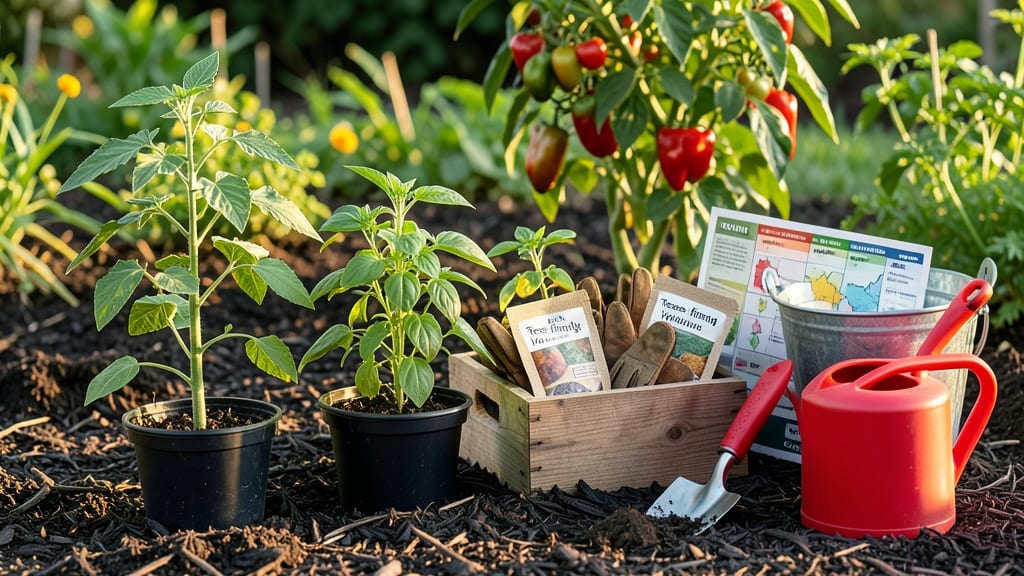
To plant gardens in Texas, time your crops by region and temperature needs: cool-season vegetables like lettuce grow best in fall (September-October) or early spring (February-March), while warm-season plants such as tomatoes belong in the ground after the last frost (April-May). North Texas can start planting earlier than South Texas because of its cooler winters.
Texas gardeners have to work with the state's extreme temperature swings, which means your planting calendar shifts dramatically depending on whether you're growing leafy greens or sun-loving tomatoes. 🌱 For example, the Texas High Plains often sees frost as early as November, while the Gulf Coast might still have warm soil in December.
I always recommend checking your local USDA hardiness zone (most of Texas falls between 7b and 9a) and tracking your area's first and last frost dates—these are your planting bookends.
The key is to plant cool-season crops 6-8 weeks before the first frost and warm-season crops only after the soil reaches at least 60°F.
Another pro tip: use season extenders like row covers or cold frames to push your growing season earlier in spring or later into fall. This is especially helpful in Central Texas where the climate can be unpredictable—you might get a warm spell in February followed by a sudden freeze.
I've found that starting seeds indoors 4-6 weeks before the ideal outdoor planting date gives my warm-season crops like peppers and eggplants a head start against Texas's long, hot summers.
💡 In This Article
- Texas Planting Zones and Frost Timelines
- Best Months to Plant Texas Vegetables, Flowers, and Herbs
Texas planting zones and frost timelines
Texas's diverse geography creates distinct planting windows across its three main regions. The North Texas (including the High Plains) typically has USDA zones 7b-8a, with first frosts arriving as early as November 15 and last frosts lingering until March 1.
This means cool-season crops like broccoli and spinach can be planted in September-October for fall harvests or February-March for spring growth.
In contrast, the Central Texas Hill Country (zones 8a-8b) experiences later first frosts around December 1 and earlier last frosts by February 15, giving gardeners a slightly extended growing season.
Down in the South Texas Gulf Coast (zones 9a-9b), frost is rare—first frosts might not arrive until December 15, and last frosts often occur after March 15.
This allows for nearly year-round gardening of cool-season crops, though summer heat (soil temps exceeding 90°F) forces a 3-month break for most vegetables. The key difference?
North Texas gardeners must rush to harvest cool-season crops before frost, while Gulf Coast gardeners can stretch their seasons with shade cloth or drip irrigation during heatwaves. 🌡️
Microclimates add another layer of complexity. Urban areas like Austin's downtown experience 5-10°F warmer nights than rural Hill Country due to the "heat island" effect, delaying frost by 1-2 weeks.
Meanwhile, elevated areas like the Edwards Plateau can see frost 2 weeks earlier than valley regions just 20 miles away. This is why I always recommend checking local weather station data (like from the Texas A&M AgriLife Extension) rather than relying solely on USDA zone maps.
For warm-season plants, the critical threshold is soil temperature. Tomatoes and peppers won't germinate well until soil reaches 60°F—in North Texas, this typically happens around April 15, while Gulf Coast gardeners can plant as early as March 1.
The Texas High Plains often faces another challenge: dry winds that can desiccate young seedlings, requiring extra mulch or windbreaks. These regional quirks explain why a neighbor's garden might thrive while yours struggles—it's not just about the calendar, but the local microclimate. 🌬️
Perennials add yet another variable. Plants like rosemary and lavender, native to Mediterranean climates, actually prefer Texas's heat but need protection from winter freezes.
In zone 8a areas, they'll survive winters with minimal protection, while zone 7b gardeners should mulch heavily or plant in south-facing slopes where cold air pools less. The takeaway? Texas gardening rewards those who study their specific corner of the state—not just the broad region. 🌿
Pro tip: Use the "10-day rule" for frost-sensitive plants. If your area has a 10% chance of frost in 10 days (check the National Weather Service), it's safe to plant warm-season crops. This simple metric has saved my $200+ worth of seedlings from unexpected freezes in North Texas springs. 💰