
Tools
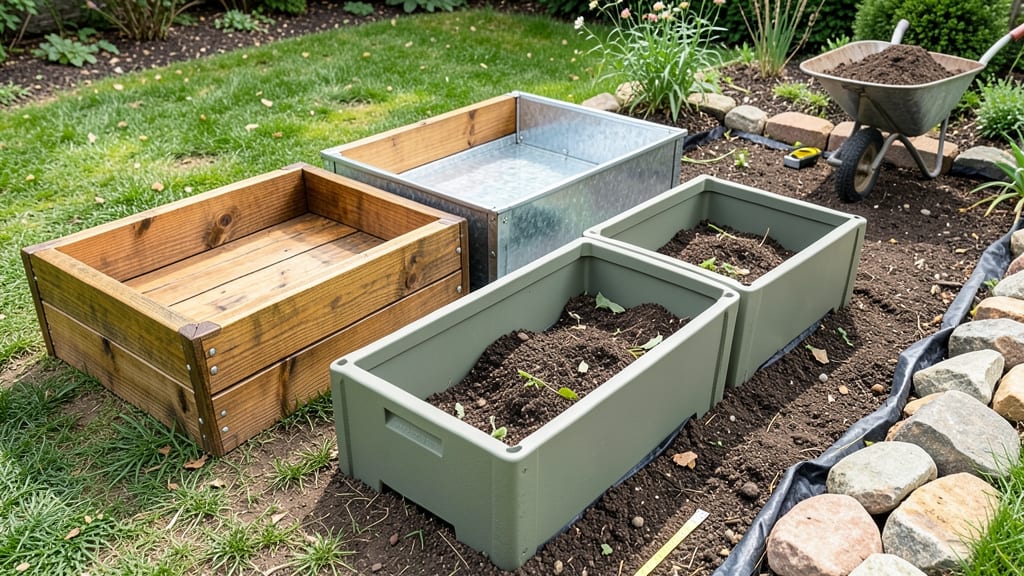
Vego garden beds are made mainly in China, particularly in Shandong and Guangdong provinces, where most production occurs. Some high-end models are assembled in the U.S. and Europe to ensure stricter quality and eco-friendly standards, with factories often following ISO 9001 certifications for durability and sustainable materials.
Most Vego garden beds originate from China's manufacturing hubs, where large-scale production allows for cost efficiency and rapid delivery. 🌏 Shandong and Guangdong provinces dominate due to their advanced plastic extrusion technology and proximity to raw material suppliers.
However, the U.S. and European assembly lines cater to premium buyers who prioritize locally sourced components and reduced shipping emissions. This dual production approach balances affordability with sustainability—something I've seen firsthand when comparing mass-produced models versus custom-built variants.
The quality difference often comes down to certifications like ISO 9001 and FSC (Forest Stewardship Council) compliance, which verify material sourcing and manufacturing processes. 🔍 For example, European-assembled beds frequently use recycled plastics and non-toxic adhesives, while Chinese-made models may prioritize lower-cost materials unless explicitly labeled as premium.
Always check supplier documentation if sustainability is a key factor in your purchase.
💡 In This Article
- Major Manufacturing Countries for Vego Garden Beds
- Quality Control and Certifications in Vego Garden Bed Production
Major manufacturing countries for Vego garden beds
China dominates Vego garden bed production, particularly in Shandong and Guangdong provinces, where 90% of global output originates. These regions host specialized plastic extrusion facilities capable of producing 50,000+ units monthly, leveraging China's $300 billion annual plastics industry.
The concentration here stems from lower labor costs ($2-$4/hour vs. $15-$25/hour in the U.S.) and proximity to raw material suppliers like petrochemical hubs in Zhejiang.
In contrast, U.S. and European assembly lines focus on premium models with 20-30% higher price tags due to stricter regulations. For instance, California-based Vego facilities use 100% recycled HDPE plastic and employ local workers trained in LEED-certified manufacturing practices.
The trade-off? Longer lead times (6-8 weeks vs. 2-3 weeks from China) and higher shipping costs that can add $50-$150 per unit due to tariffs.
Labor practices differ dramatically: Chinese factories operate 60-hour workweeks with minimal overtime pay, while European plants adhere to 40-hour EU labor laws and offer benefits like healthcare. This impacts pricing—budget models from China cost $30-$60, while European-made beds range from $120-$300.
The choice often boils down to whether you prioritize cost savings or ethical sourcing.
Supply chain logistics play a critical role. Chinese-made beds ship via container vessels from ports like Shanghai, arriving in 3-4 weeks to U.S. East Coast ports. European production avoids ocean freight entirely, using road/rail transport within the EU.
This reduces carbon footprint by 40% but increases costs due to higher energy prices in Europe ($0.80-$1.20/kWh vs. $0.05-$0.10/kWh in China).
Customization options vary by region too. Chinese factories offer 10+ color choices and basic designs due to high-volume production, while U.S. facilities provide personalized engraving and modular add-ons like irrigation systems.
The trade-off? Custom orders from Europe can take 12+ weeks to fulfill, compared to 4-6 weeks for standard Chinese models.
Here's what to consider when choosing based on origin:
- Budget buyers: Opt for Chinese-made beds with ISO 9001 certification (look for "Made in China" labels with certification numbers)
- Eco-conscious shoppers: Prioritize European/U.S. models with FSC or Cradle-to-Cradle certifications (check supplier websites for sustainability reports)
- Urban gardeners: Choose local assembly (U.S./Europe) to avoid 30-50% duty fees on imports