
Tools
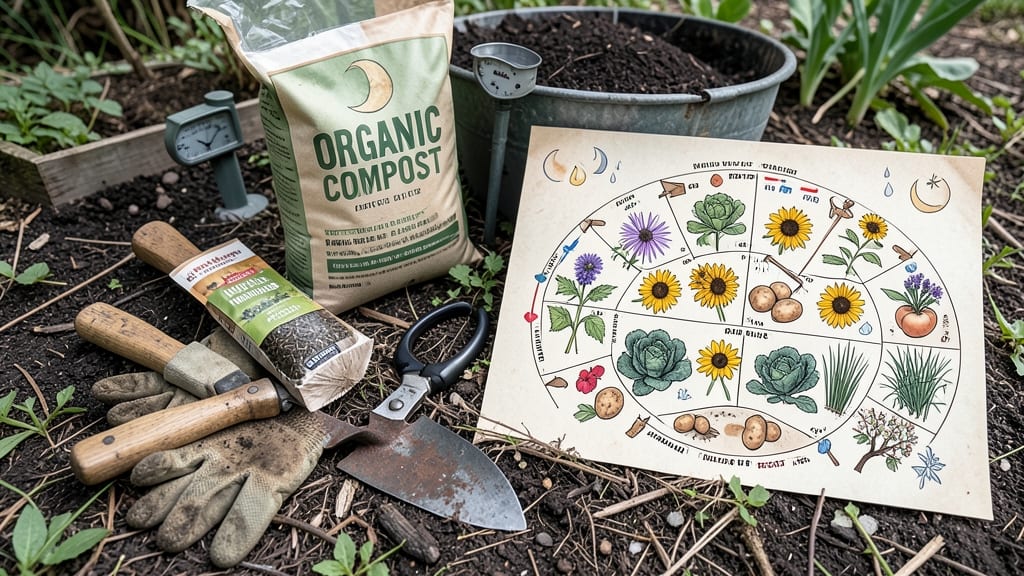
A Wisconsin gardening calendar helps you plan seasonal tasks by month, adapting to the state's short growing season and cold winters—starting seeds indoors in March, moving outdoors after the last frost (mid-May), and harvesting cold-hardy crops like kale and spinach well into fall.
A Wisconsin gardening calendar isn't just about timing—it's about working with the state's unique climate challenges. 🌱 The key is balancing early starts with frost protection, since temperatures can swing dramatically even in summer.
For example, southern Wisconsin's Zone 5 typically sees last frost dates around May 10-15, while northern areas in Zone 4 may wait until May 25. This means gardeners in different regions need to adjust their planting windows by 2-3 weeks to avoid frost damage.
What makes Wisconsin gardening particularly rewarding is the ability to extend harvests through fall. Cold-hardy crops like Brussels sprouts, carrots, and winter radishes thrive when planted in late summer, giving you fresh produce well into November.
The trick is to use row covers or cold frames to protect tender plants during unexpected late-season freezes—a common occurrence in the Badger State.
💡 In This Article
- Key Wisconsin Growing Zones and Frost Dates
- Month-by-Month Wisconsin Garden Task Checklist
Key Wisconsin growing zones and frost dates
Wisconsin spans USDA hardiness zones 3b in the far north to 6a in the southwest, creating dramatic differences in frost dates. The state's geography—from Lake Michigan's moderating influence to inland valleys—means microclimates can vary by 10°F within just 20 miles.
For example, Milwaukee's Zone 5b typically sees its last spring frost around April 25, while Eau Claire's Zone 4a often waits until May 15. These variations explain why gardeners in Door County can plant peas 2 weeks earlier than those in Wausau.
The first frost arrives even more dramatically: southern Wisconsin averages October 15, while northern regions may see frost as early as September 20. This 3-week window forces gardeners to choose heat-tolerant varieties or use season extenders like row covers. The science behind this?
Cold air sinks and collects in valleys, while lake-effect zones stay warmer longer. That's why a garden near a large body of water might support tomatoes until October 10, while an inland plot could see frost by September 25. 🌡️
Understanding these zones helps with crop selection. Zone 4 gardeners should focus on short-season varieties (like 50-day tomatoes) while Zone 5 can try 70-day varieties. The key is matching plant maturity dates with your specific frost window.
For instance, in Zone 4, you'd plant bush beans on May 20 for a 90-day harvest before first frost, while Zone 5 could wait until May 28 for the same timeline.
Even within zones, elevation matters. A hilltop garden in Zone 5a might experience 5°F colder nights than a valley garden just 1 mile away. This is why professional gardeners recommend testing your microclimate by planting frost-sensitive crops like basil in multiple locations.
The data you collect over 3 years will give you a more accurate picture than USDA maps alone.
For vegetable gardeners, this means planning succession plantings carefully. In Zone 4, you might plant lettuce on April 15, again on May 15, and a final time on June 15—each batch timed to mature before frost.
The same strategy works for radishes, which can be harvested in just 25 days. This staggered approach maximizes your harvest window by 2-3 months compared to single planting.
Don't overlook the soil temperature factor—seeds need 50°F for peas, 60°F for beans, and 70°F for tomatoes to germinate properly. A soil thermometer is your best friend here, as surface air temperature can be 10°F warmer than the soil.
This explains why some gardeners in Zone 5 might plant tomatoes 2 weeks earlier than recommended charts suggest.