
Watering
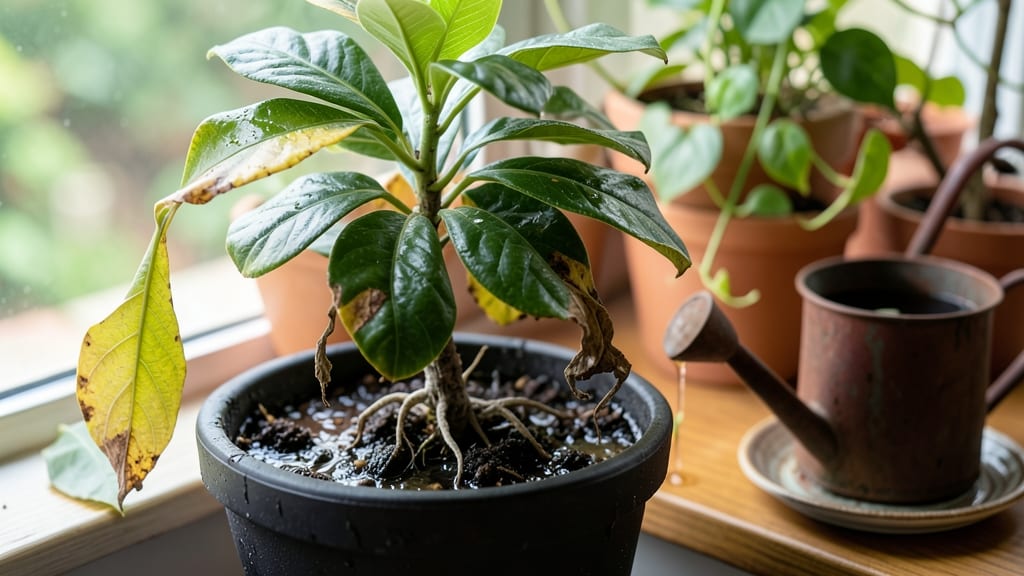
When your gardenia develops yellow leaves from the overwatered gardenia, you're dealing with root suffocation and nutrient depletion. Immediately halt watering, repot in fast-draining soil, trim affected foliage, and verify drainage holes to restore health and encourage new growth.
A yellow overwatered gardenia signals a critical issue where waterlogged roots suffocate, starving for oxygen while excess moisture flushes away essential nutrients like nitrogen and potassium. 🌿 Without these, chlorophyll production grinds to a halt, turning leaves yellow first at the edges before spreading inward.
The real kicker? Soggy soil also invites fungal infections, which further stress the plant. I’ve seen gardenias recover beautifully when you combine proper drainage with a balanced fertilizer—just don’t overdo the nitrogen, or you’ll encourage more leaf growth at the expense of flowers.
Here’s the game-changer: most gardenia problems stem from poor drainage rather than overzealous watering habits. A quick fix is mixing perlite or orchid bark into your potting mix to create air pockets. And if your plant is already struggling, don’t panic—gardenias are surprisingly resilient once you address the root issues.
Just remember, these tropical beauties prefer their soil to dry out slightly between waterings, especially in cooler months.
💡 In This Article
- Why Overwatering Turns Gardenia Leaves Yellow
- Step-by-Step Recovery Plan for Overwatered Gardenias
Why overwatering turns gardenia leaves yellow
When gardenias receive too much water, their roots suffocate because they can't absorb enough oxygen from waterlogged soil. This condition, called hypoxia, forces roots to switch from aerobic respiration (which requires oxygen) to anaerobic respiration (which doesn't).
The byproduct of anaerobic respiration is ethanol, which is toxic to plant cells. 🌱 Over time, this chemical buildup damages root cells, reducing their ability to uptake water and nutrients like nitrogen and potassium—both critical for chlorophyll production.
The yellowing begins when chlorophyll breaks down due to nutrient starvation. You'll notice it first on older leaves at the edges, where chlorophyll degrades fastest. This process is called chlorosis, and it's a clear sign your gardenia isn't getting the essential elements it needs.
The plant's immune system also weakens in soggy conditions, making it vulnerable to fungal infections like Phytophthora or Pythium, which further accelerate leaf yellowing and drop.
What most people don't realize is that gardenias are tropical plants adapted to well-draining, slightly acidic soils in their native habitats. In containers, this means the soil should dry out to about 1-2 inches deep between waterings.
When you overwater, you're essentially drowning the roots while simultaneously leaching away nutrients through the drainage holes. The combination of root stress and nutrient loss creates a perfect storm for yellow leaves and stunted growth.
Another critical factor is how quickly problems escalate. Within 3-5 days of consistent overwatering, you'll see visible wilting even when the soil appears moist. This is because the roots can't transport water efficiently to the leaves.
The plant starts conserving energy by shedding leaves, which is its survival mechanism when it can't meet its basic needs. 💚 The good news? Gardenias are tough—they can bounce back quickly once you correct these issues.
Consider this comparison: healthy gardenia roots should have a light brown color and a slight resistance when gently squeezed. Overwatered roots, however, turn grayish or black and feel mushy—a clear sign of rot.
This physical change happens because the lack of oxygen triggers anaerobic bacteria in the soil, which break down root tissues. The faster you address this, the better the plant's chances of recovery.
Here's what's happening at the cellular level: without oxygen, mitochondria in root cells can't produce enough ATP (the plant's energy currency). This energy deficit slows down all metabolic processes, including nutrient absorption and photosynthesis.
The yellowing leaves are essentially the plant's way of saying, "I can't feed myself anymore—help me fix this!"
One final detail worth noting is how humidity plays a role. While gardenias love humidity (ideally 50-70%), high humidity combined with overwatering creates a breeding ground for fungal spores.
These spores latch onto the weakened plant, further blocking nutrient uptake and accelerating leaf yellowing. It's like giving your plant a double whammy of stress.