
Light Requirements
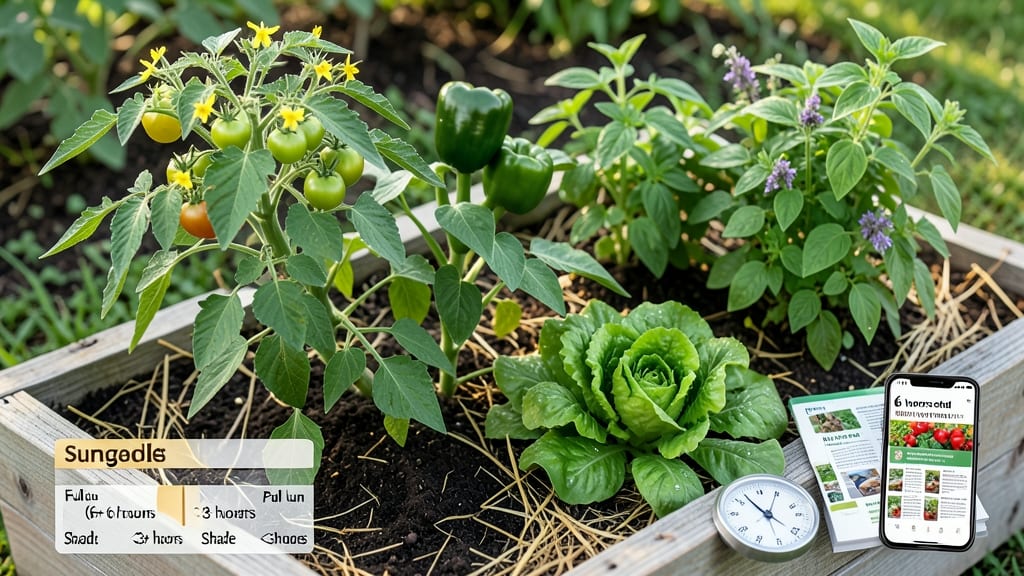
A vegetable garden needs 6 to 8 hours of sun daily 🥬 to grow strong and productive, but the exact amount depends on what you’re planting—and getting it wrong can mean the difference between a thriving harvest and wasted effort.
Picture this: you’ve spent weeks preparing your soil, carefully selecting seeds, and even built a raised bed with the best compost money can buy. But your tomatoes are small and your lettuce bolts before you can enjoy a single leaf.
Sound familiar? The issue might be sunlight—or the lack of it.
Most vegetables crave full sun, but some, like leafy greens or root crops, can handle a little shade. The key is matching your garden’s light to the plants you want to grow, and knowing how to adjust if your space gets too much or too little sun.
In this guide, I’ll break down the sunlight needs for common crops, show you how to measure your garden’s light, and share tips to maximize your harvest—no matter where you live or what your space looks like.


Sunlight requirements by vegetable type: full sun vs. partial shade needs
Understanding how many hours of sun your vegetable garden needs is the first step to growing a thriving harvest. Most vegetables fall into three categories: full sun lovers (6+ hours), partial shade tolerators (3-6 hours), or shade-tolerant varieties (under 3 hours).
Getting this right prevents leggy plants, poor yields, or even plant death. For example, a tomato plant wilts under partial shade, while lettuce bolts in full sun. Let’s break down the sunlight needs by crop type so you can plan your garden layout with confidence.
Full sun vegetables are the heavy hitters of the garden, demanding at least 6 hours of direct sunlight daily. These include tomatoes, peppers, and cucumbers, which need intense light to produce fruit.
Partial shade crops, like beans and spinach, thrive with 3-6 hours of sun and can handle afternoon shade, especially in hot climates. Meanwhile, shade-tolerant crops such as kale or arugula can survive with minimal sunlight, making them perfect for north-facing beds or container gardens with limited exposure.
Here’s a quick reference to help you visualize the differences. Use this sunlight requirements table to match your garden space with the right crops:
If you’re growing tomatoes or peppers, prioritize the sunniest spot in your yard—these crops are finicky and won’t tolerate less than 6 hours of direct sunlight. Place them near a south-facing fence or raised bed to maximize exposure.
For leafy greens like spinach or kale, a morning sun spot with afternoon shade works best, especially in hotter climates where afternoon rays can scorch tender leaves.
Partial shade crops like beans and carrots are versatile and can adapt to 3-6 hours of sunlight, making them ideal for containers or garden edges. However, even these crops benefit from a few hours of morning sun to kickstart growth.
For example, bush beans grow well in partial shade but produce fewer pods compared to their full-sun counterparts. Always aim to provide at least 4 hours of sunlight for these varieties to ensure decent yields.
Shade-tolerant crops are your secret weapon for low-light areas. Kale, arugula, and radishes thrive with as little as 3 hours of sunlight daily, making them perfect for urban balconies or the north side of your house.
These crops often have broad leaves that help them capture scattered light efficiently. Just be cautious—even shade-loving plants may become leggy or bitter if deprived of sunlight entirely.
Pro tip: Observe your garden’s sunlight patterns before planting. Use a sun calculator app or mark your yard with stakes to track how sunlight moves throughout the day.
This helps you identify microclimates—like the shady spot under a tree or the sunny patch near your patio—so you can place crops accordingly.
For instance, if your tomato plants are only getting 4 hours of sun, consider relocating them or supplementing with a reflective surface (like white mulch) to bounce extra light onto their leaves.
Remember, the quality of sunlight matters just as much as the quantity. Morning sun is gentler and less intense than afternoon rays, which can cause heat stress. In hot climates, partial afternoon shade can protect delicate crops like lettuce
How to measure sunlight in your garden and adjust for optimal growth
Measuring sunlight in your garden is the first step to creating the perfect growing environment. Most vegetables need 6-8 hours of direct sunlight daily, but some—like leafy greens—thrive with just 3-4 hours. Without accurate measurements, you risk under- or over-exposing plants, leading to poor growth or even death.
Start by observing your garden’s sunlight patterns over a week. Shadows shift with the seasons, so don’t rely on a single day’s observations. Use a sunlight tracker or a simple DIY method like placing a white cloth or stakes in different garden spots to track sun exposure throughout the day.
⚠️ callout warning
Too little sunlight causes leggy, weak plants with poor yields, while too much can scorch leaves and reduce flavor. Tomatoes, peppers, and cucumbers require full sun (6-8+ hours), while lettuce and spinach can tolerate partial shade (3-4 hours).
🌱 Pro Tip: Use shade cloth (30-50%) to protect delicate plants in hot climates.
Seasonal changes dramatically affect sunlight exposure. In summer, your garden may receive longer daylight hours (up to 15 hours), while winter days can drop to just 8-9 hours. Adjust planting locations accordingly—move sun-loving crops to sunnier spots in winter or use reflective surfaces like white mulch to maximize light.
If your garden lacks sufficient sunlight, consider vertical gardening or container gardening near windowsills. South-facing walls or fences reflect extra light, creating a microclimate with more sun exposure. For shade-tolerant crops, choose varieties like kale, Swiss chard, or bush beans, which adapt well to 3-4 hours of sun.
Use shade cloth to fine-tune sunlight exposure. A 30% shade cloth blocks 30% of light, ideal for hot climates or seedlings, while a 50% cloth works for partial shade needs.
Secure it with stakes or a frame to avoid damaging plants. Regularly check your garden’s sunlight with a sunlight meter or app for real-time adjustments.
Experiment with different planting layouts to optimize sunlight distribution. Tall plants like corn or sunflowers should face south to avoid shading shorter crops. Rotate plants seasonally to ensure even sun exposure. With these adjustments, you’ll create a balanced, high-yield garden tailored to your space’s unique light conditions.