
Planting
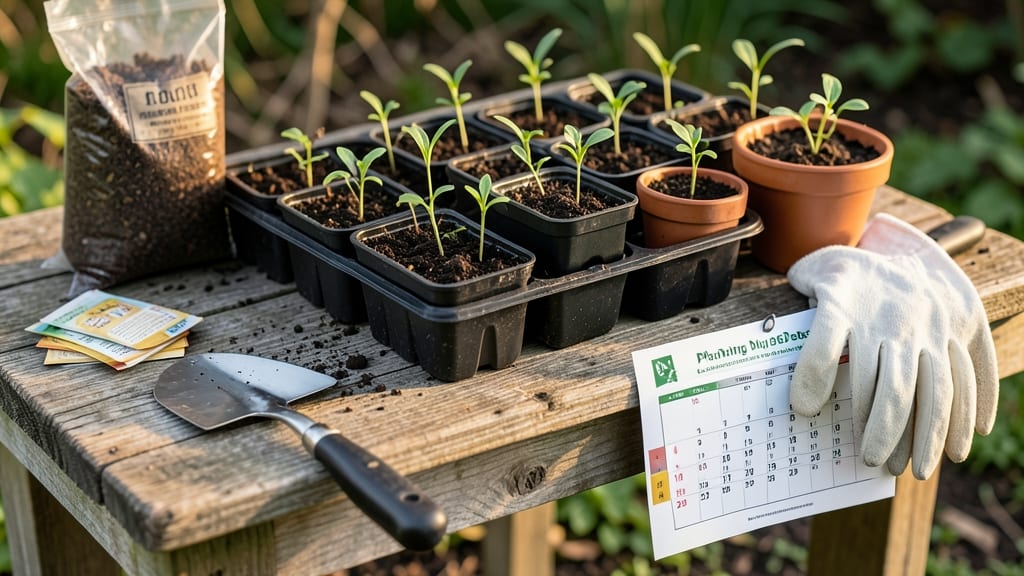
Planting a vegetable garden in New Jersey at the right time means the difference between a bountiful harvest and a sad, wilted disappointment.
New Jersey’s unpredictable spring weather can turn your vegetable garden dreams into a gamble—unless you plant at the perfect time for Zone 6b’s short growing season.
Cool-season crops like spinach and peas thrive when planted 4-6 weeks before your last frost date, while tomatoes and peppers need to wait until after the last frost—usually mid-April in northern NJ and earlier in the south.
Below, I’ll break down the exact planting windows for your favorite veggies, how to adjust for coastal vs. inland microclimates, and the one mistake that ruins more gardens than any other.
NJ Zone 6b planting calendar: exact dates for vegetables by type
New Jersey’s Zone 6b climate means your vegetable garden’s success hinges on precise timing—especially with cool-season crops like spinach and warm-season staples like tomatoes. Coastal areas (e.g., Cape May) enjoy 2-3 weeks earlier last frost dates than inland regions (e.g., Sussex County), so adjust your calendar accordingly.
Below, I’ll break down the exact planting windows for your most popular veggies, including adjustments for direct sowing vs. transplanting.
For cool-season crops, start seeds indoors 4-6 weeks before your last frost date (typically March 15–April 1 for inland NJ, March 1–March 15 for coastal areas). These hardy plants can handle light frosts and even thrive in 50°F soil.
Warm-season crops, however, need to wait until 2-3 weeks after last frost (around May 1–May 15 inland, April 15–April 30 coastal) when soil temperatures consistently stay above 60°F.
| Crop Type | Inland NJ Dates | Coastal NJ Dates | Notes |
|---|---|---|---|
| Cool-Season Crops |
Start Indoors: Mar 15 Direct Sow: Mar 20–Apr 15 |
Start Indoors: Mar 1 Direct Sow: Mar 10–Apr 1 |
Spinach, kale, peas, lettuce. Use row covers for early planting. |
| Warm-Season Crops |
Transplant: May 1–May 15 Direct Sow: May 15–Jun 1 |
Transplant: Apr 15–Apr 30 Direct Sow: Apr 30–May 15 |
Tomatoes, peppers, beans, cucumbers. Wait for soil >60°F. |
| Fall Crops | Direct Sow: Jul 15–Aug 15 | Direct Sow: Jul 1–Aug 1 | Kale, carrots, radishes, broccoli. Aim for 90-day harvests before first frost. |
Peas and spinach are my go-to cool-season crops because they tolerate light frosts and can even bolting if planted too late in spring. For inland NJ gardeners, I recommend starting peas March 20–April 1 and spinach March 15–March 30.
Coastal gardeners can push these dates back by 2 weeks—just watch for false springs where warm spells trick you into planting too early.
Tomatoes and peppers are heat-lovers that need consistent warmth to thrive. In Zone 6b, transplant them after May 1 inland or after April 15 near the coast. If you’re eager to start earlier, use biodegradable pots and row covers to protect seedlings from late frosts.
My heirloom tomatoes always do best when planted May 10–May 20 inland.
Don’t overlook succession planting for crops like lettuce and beans. For lettuce, sow seeds every 2 weeks from March 20 to August 15 to ensure a continuous harvest.
Beans, on the other hand, prefer warmer soil and should be planted after May 15 inland or after May 1 near the coast. I’ve found that bush beans mature faster than pole beans, making them ideal for short-season NJ gardens.
For fall planting, focus on fast-maturing crops like radishes, lettuce, and kale. Start seeds July 15–August 15 inland or July 1–August 1 near the coast to harvest before the first frost (typically November 15 inland, November 1 coastal).
My fall kale always sweeter after a light frost, so I plant it August 1–August 15 for a winter harvest.
Pro tip: Use a soil thermometer to check temperatures—cool-season crops need 45–55°F soil, while warm-season crops thrive in 60–70°F soil. If your soil is too cold, wait 1–2 weeks longer. I’ve learned the hard way that rushing warm-season plants leads to poor germination and stunted growth.
Adjust your planting dates based on microclimates. Urban areas like Newark may experience heat islands
How to time your NJ garden for maximum yield (and avoid common mistakes)
New Jersey’s Zone 6b climate demands precision when planting vegetables. A false spring—where warm temperatures trick you into early planting—can ruin your crops when frost returns. My garden in Sussex County once lost all my tomato seedlings to a late-May freeze, a painful lesson in patience.
Microclimates further complicate timing. Newark’s urban heat island stays 5-10°F warmer than rural Sussex County, creating a 2-3 week planting window difference for the same crops. Even within your backyard, a south-facing slope warms up faster than a north-facing bed.
To maximize yields, I’ve learned to use season extenders like cold frames and row covers. These tools can push your last harvest dates by 4-6 weeks, turning a 100-day tomato season into a 140-day bounty.
But timing their deployment is critical—too early, and you’ll trap heat; too late, and you miss the window.
⚠️ callout-warning ⚠️
Mistake: Planting warm-season crops (tomatoes, peppers) before May 15 in most of NJ.
Why it fails: Average last frost is April 15, but 30% of NJ springs see frost after April 20.
Fix: Wait until 2 weeks after your local last frost date (check NJ Weather maps). Use row covers for 1-2 weeks post-planting as a buffer.
Pro Tip: Sussex County gardeners: Aim for May 20 for tomatoes; Newark gardeners can start 1 week earlier due to urban warmth.
For cool-season crops like spinach and peas, I plant 4-6 weeks before the last frost date—around March 15 in southern NJ and April 1 in the north. But here’s the trick: Use cold frames to start seeds 6 weeks earlier than your typical planting window.
My kale harvests now stretch from May through October instead of just June-July.
Adjust for your specific location: Newark’s urban microclimate lets you plant zucchini and beans by May 1, while Sussex County gardeners should wait until May 15. Check your local Cooperative Extension office for hyper-local advice—Rutgers NJAES provides free planting calendars tailored to your ZIP code.
Monitor soil temperatures with a soil thermometer—50°F+ is ideal for warm-season crops. My pepper seedlings stalled for weeks until I realized the soil was only 48°F despite air temps in the 70s. A black plastic mulch raised soil temps by 10°F within days, jumpstarting growth.
Finally, embrace succession planting to stretch yields. Instead of one lettuce planting in spring, I sow new seeds every 2 weeks until July 15. This ensures a steady harvest while accounting for NJ’s short 165-day growing season.
The key is balancing planting dates with harvest windows—no crop should be left struggling at season’s end.