
Vegetables
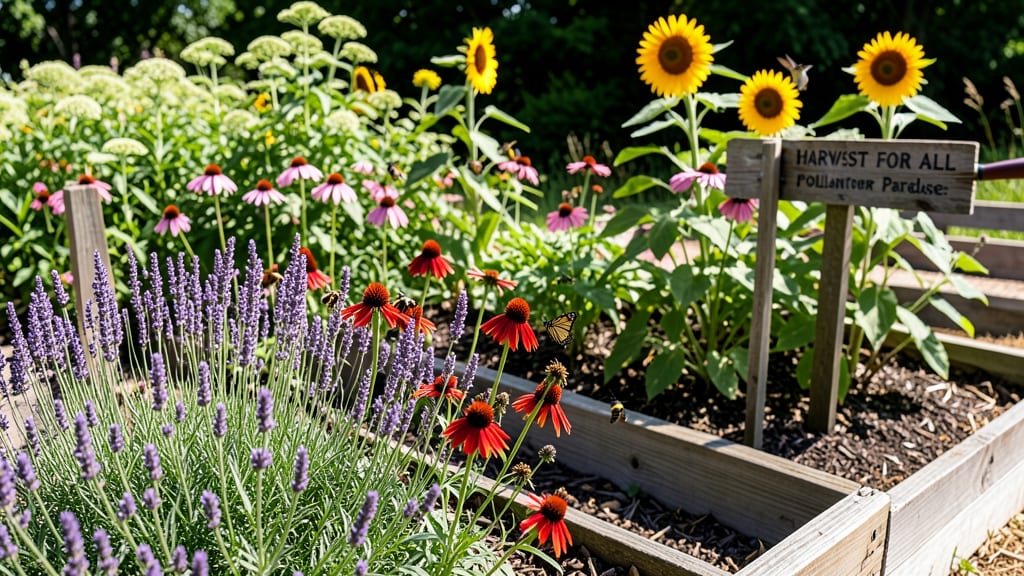
Purpose gardens maximize yields and sustainability through thoughtful design that prioritizes biodiversity, efficient space use, and ecosystem health—creating thriving systems that produce more with less waste over time.
Purpose gardens aren't just about growing food—they're about creating systems that work with nature.
By combining companion planting, crop rotation, and soil-building practices, these gardens naturally boost plant health and productivity. 🌱 The key lies in their intentional design: every plant placement serves a purpose, whether it's attracting pollinators, repelling pests, or improving soil fertility.
This approach doesn't just increase what you harvest—it reduces the resources needed to maintain the garden, making it both more productive and sustainable in the long run.
What sets purpose gardens apart is their focus on long-term health rather than short-term gains. For example, intercropping fast-growing plants with slower ones prevents bare soil, while mulching retains moisture and suppresses weeds.
These methods create a self-sustaining cycle where the garden becomes more resilient each season. The result? Higher yields with less effort, all while supporting local ecosystems and reducing your environmental footprint.
💡 In This Article
- How Purpose Gardens Optimize Plant Growth and Soil Health
- Designing a High-Yield Purpose Garden: Practical Layout Tips
How purpose gardens optimize plant growth and soil health
Purpose gardens leverage the natural relationships between plants to create a thriving ecosystem. At their core, they use companion planting, where certain plant pairs benefit each other—like basil alongside tomatoes, which repels pests and enhances flavor.
The science here involves allelopathy, where plants release chemicals that either inhibit or stimulate growth in neighboring species.
For instance, marigolds release alpha-terthienyl, a compound that deters nematodes and other soil-borne pests, while also attracting beneficial insects like ladybugs that prey on aphids. 🌱 This mutualistic relationship reduces the need for synthetic pesticides, creating a closed-loop system where every plant plays a role in the garden's health.
The soil in purpose gardens becomes a living, dynamic environment thanks to crop rotation and cover cropping. Rotating crops like tomatoes with legumes (such as beans or peas) breaks pest and disease cycles while legumes fix nitrogen in the soil, reducing the need for synthetic fertilizers.
Cover crops like clover or vetch, planted during off-seasons, prevent erosion, suppress weeds, and add organic matter when tilled in. Studies show that gardens practicing rotation can see a 20-30% increase in soil organic matter within 3 years, directly correlating to better water retention and nutrient availability.
The microbial activity in these soils also skyrockets—healthy soil can contain up to 1 billion bacteria per gram, which decomposes organic matter into plant-accessible nutrients.
Water efficiency is another game-changer in purpose gardens. By planting species with complementary water needs—like pairing drought-tolerant lavender with moisture-loving lettuce under drip irrigation—you create a balanced system that minimizes waste.
Mulching with straw or wood chips further reduces evaporation by 30-50%, while also regulating soil temperature and suppressing weeds. The result? Plants grow stronger with fewer resources, and the garden becomes more resilient to climate fluctuations.
This isn't just theory: data from the Rodale Institute shows that organic, purpose-driven gardens can use up to 50% less water than conventional monoculture plots while producing comparable yields.
Purpose gardens also excel in pollinator support, which directly impacts fruit and seed production. Planting native flowers like borage or sunflowers alongside vegetables creates a "pollinator highway," increasing yields by up to 40% for crops like cucumbers and squash.
The diversity of plants attracts a wider range of beneficial insects, including bees, hoverflies, and predatory wasps, which naturally control pests. For example, a study in Michigan found that gardens with 10+ plant species had 60% fewer pest outbreaks than monoculture plots.
This biodiversity isn't just good for yields—it's essential for long-term ecosystem stability.
One often-overlooked benefit is the carbon sequestration purpose gardens provide. Healthy soils rich in organic matter act as carbon sinks, storing up to 3 tons of CO2 per acre annually. This happens because microbial activity in well-managed soils accelerates the breakdown of organic matter, locking carbon into stable compounds.
For comparison, a conventional garden might sequester only 0.5 tons per acre, highlighting how purpose-driven design directly contributes to climate mitigation.
The sensory rewards are immediate too: the rich, dark humus of a thriving purpose garden smells like earth and possibility, a stark contrast to the sterile, nutrient-poor soil of conventional plots.
For the home gardener, this means your garden can become a self-sustaining powerhouse with minimal external inputs. Start small: dedicate a corner to companion planting pairs, or add a few native flowers to attract pollinators.
Over time, you'll notice fewer pests, healthier plants, and a soil that almost seems to "feed itself." The key is patience—purpose gardens build resilience over seasons, not overnight. But the payoff? A bountiful harvest that's not just abundant, but sustainable for generations to come. 🌿